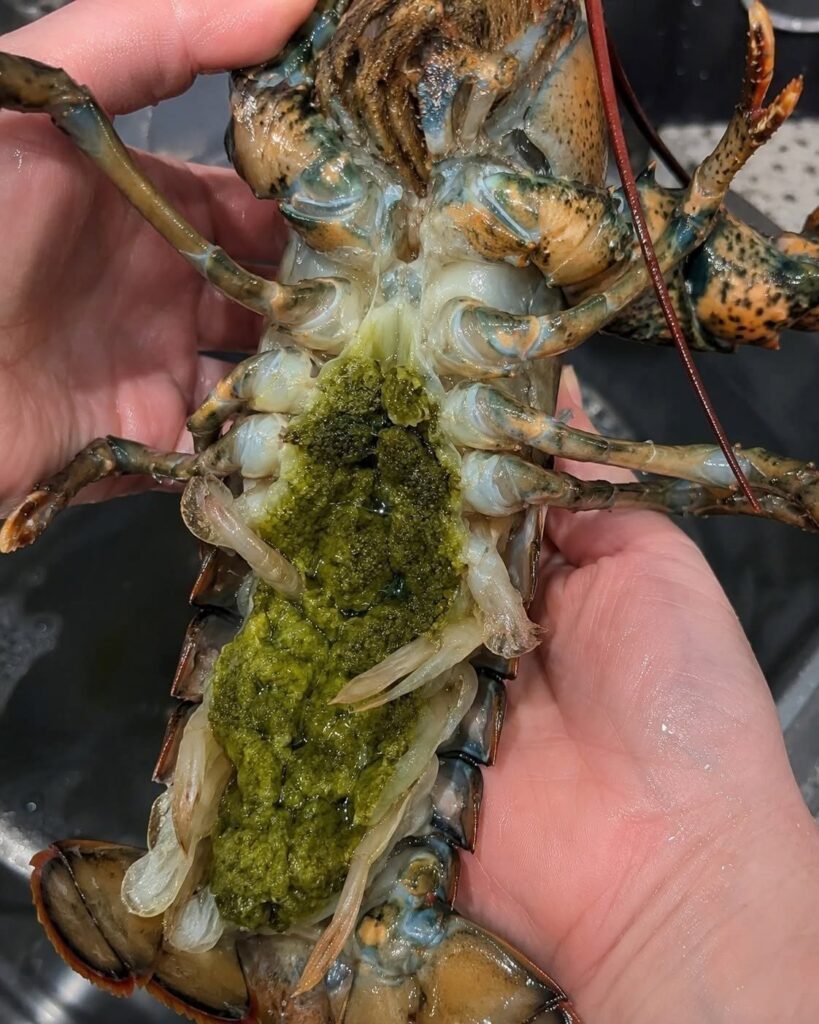
Why Do People Enjoy Tomalley?
ADVERTISEMENT
In many coastal regions, lobster tomalley has been considered a culinary delicacy for generations.
Its flavor is often described as:
- Rich
- Creamy
- Intensely savory
- Briny
- Full of ocean flavor
Some chefs use small amounts of tomalley to enrich seafood sauces, lobster bisque, chowders, pasta dishes, and compound butters.
ADVERTISEMENT
Because of its concentrated taste, only a little is typically needed to enhance a recipe.
Tomalley vs. Lobster Roe: What’s the Difference?
People sometimes confuse tomalley with another substance found inside female lobsters.
Here’s how they differ:
Lobster Tomalley
- Soft and creamy
- Green in color
- Digestive organ (hepatopancreas)
- Rich, savory flavor
Lobster Roe (Coral)
- Tiny eggs produced by female lobsters
- Dark green or black before cooking
- Turns bright red or orange when cooked
- Slightly firmer texture
- Mild, sweet seafood flavor
Although they may appear together inside a female lobster, they are completely different parts of the animal.
Is Lobster Tomalley Safe to Eat?
Tomalley is edible and has been enjoyed for many years. However, because the hepatopancreas filters and stores certain substances, it may accumulate environmental contaminants that are naturally present in marine ecosystems.
For this reason, some food safety authorities recommend limiting or avoiding frequent consumption of lobster tomalley, particularly for children and pregnant individuals.
If you choose to eat it, moderation is generally recommended, and it’s a good idea to stay informed about any local seafood consumption advisories in your area.
How Is Tomalley Used in Cooking?
Many seafood cooks enjoy incorporating small amounts of tomalley into recipes for added richness.
Popular uses include:
- Lobster bisque
- Seafood chowder
- Cream sauces
- Pasta dishes
- Seafood butter
- Shellfish spreads
Its concentrated flavor pairs especially well with lobster, crab, shrimp, scallops, and other shellfish.
Tips for Buying Fresh Lobster
If you’re purchasing whole lobster, look for:
- Fresh ocean aroma without strong or unpleasant odors
- Firm shell and intact claws
- Bright appearance
- Proper refrigeration before cooking
- Purchase from reputable seafood markets or trusted suppliers
Proper handling and cooking help maintain both quality and food safety.
Frequently Asked Questions
Why is lobster tomalley green?
The green color comes naturally from the lobster’s digestive organ and may vary depending on its diet and biology.
Does every lobster contain tomalley?
Yes. Both male and female lobsters have tomalley because it is an essential digestive organ.
Does cooking change the color?
The tomalley usually remains green after cooking, while lobster roe changes from dark green or black to a bright red or orange color.
Final Thoughts
The green substance inside a lobster, known as tomalley, is one of the most distinctive features of this popular seafood. Valued by many for its creamy texture and rich, ocean-like flavor, it has long been considered a delicacy in many coastal cuisines.
Whether you choose to enjoy it or not is a personal preference. Understanding what it is, how it’s used, and the food safety considerations can help you make an informed decision the next time you enjoy a freshly cooked lobster.
ADVERTISEMENT