ADVERTISEMENT
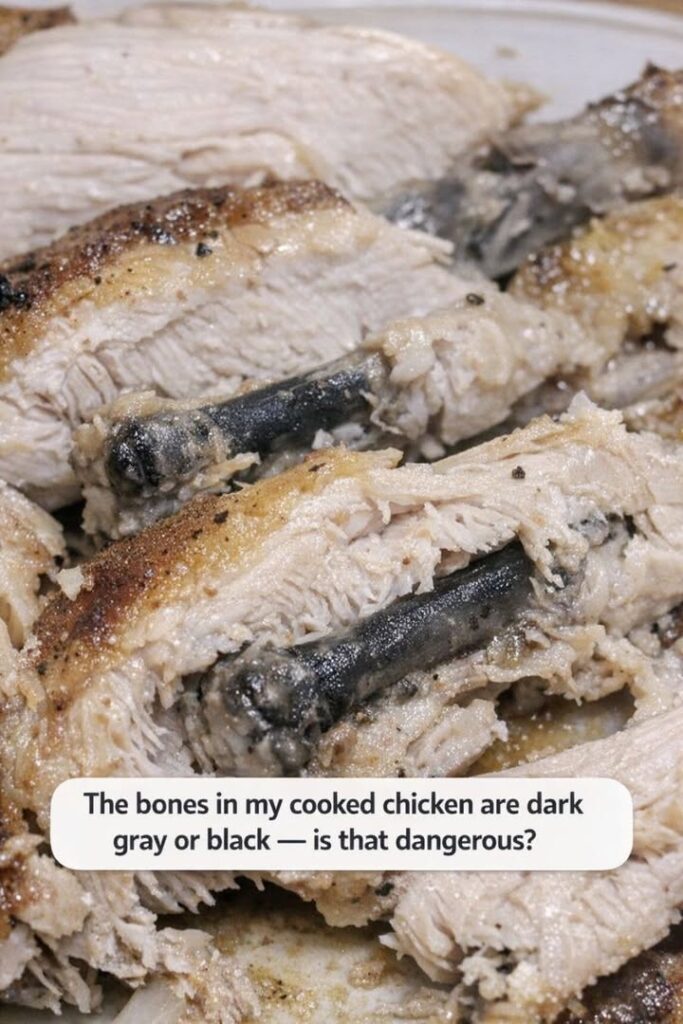
Cooking chicken is part of everyday life for millions of families, but discovering dark gray or black bones after the meal is prepared can be surprising. Many people immediately worry that the chicken is undercooked, spoiled, or unsafe to eat. Fortunately, in most cases, darkened chicken bones are completely normal and do not indicate a food safety problem.
Understanding why chicken bones change color can help you avoid unnecessary concern while ensuring you’re still following proper food safety practices. This guide explains the science behind dark chicken bones, when they’re harmless, when they could signal a problem, and how to cook and store poultry safely.
Why Do Chicken Bones Turn Dark After Cooking?
The dark gray or black color found inside chicken bones usually comes from bone marrow pigments, not from spoiled meat.
ADVERTISEMENT
Bone marrow contains blood vessels and natural pigments such as hemoglobin and myoglobin. During cooking, heat causes these pigments to react and oxidize, creating a dark gray, brown, or nearly black appearance around the bone.
This is especially common in:
- Chicken drumsticks
- Thighs
- Wings
- Young broiler chickens
The discoloration is largely cosmetic and does not automatically mean the chicken is unsafe to eat.
The Science Behind Dark Bone Marrow
Young chickens have softer, more porous bones than mature birds. During cooking, tiny amounts of marrow pigments can seep into the surrounding bone tissue.
As the chicken reaches cooking temperature, the iron contained in hemoglobin reacts with heat and oxygen, producing the dark coloration many people notice.
Because younger chickens have less dense bones, this process is much more noticeable than it is in older poultry.
When Dark Bones Are Completely Normal
In most situations, dark bones are perfectly safe.
The chicken is generally safe to eat if:
- The meat is fully cooked.
- The internal temperature reaches 165°F (74°C).
- The meat has a normal texture.
- There is no unpleasant odor.
- There are no signs of spoilage.
Bone color alone should never be used to judge whether chicken is safe.
How the Chicken’s Age Affects Bone Color
See more on the next page to continue reading →
ADVERTISEMENT