How the Chicken’s Age Affects Bone Color
ADVERTISEMENT
The age of the bird is one of the biggest factors influencing bone discoloration.
Young broiler chickens have:
- Softer bones
- Larger marrow cavities
- Greater blood supply within the bones
These characteristics make dark bones much more common after cooking.
ADVERTISEMENT
Older chickens develop denser bones, making marrow pigments less visible once cooked.
Does Freezing Make Bones Darker?
Yes. Freezing can contribute to darker-looking bones.
During freezing and thawing:
- Ice crystals may damage tiny blood vessels inside the bone.
- Small amounts of blood pigments can migrate toward the bone surface.
- Cooking then oxidizes these pigments, making the bone appear darker.
This is why frozen chicken sometimes develops darker bones than fresh poultry, even when both are cooked correctly.
The Role of Hemoglobin and Myoglobin
Hemoglobin carries oxygen through the blood, while myoglobin stores oxygen inside muscle tissue.
Both contain iron.
When exposed to heat during cooking, these proteins undergo natural chemical changes that create dark pigments around the bone.
This reaction is similar to the color changes seen when beef browns during cooking.
How to Tell If Chicken Is Actually Unsafe
Instead of focusing on bone color, pay attention to reliable food safety indicators.
Unsafe chicken may have:
- A sour or foul odor
- Slimy or sticky texture
- Mold growth
- Green, gray, or rainbow-colored patches on the meat
- Excessive discoloration before cooking
The most reliable method is using a digital meat thermometer.
Chicken is considered safely cooked when the thickest part reaches an internal temperature of 165°F (74°C).
Signs of Undercooked Chicken
Dark bones do not automatically mean the chicken is undercooked.
However, undercooked chicken may have:
- Raw or translucent flesh
- Soft or rubbery texture
- Cool spots near the center
- Excess liquid that appears pink
If you’re unsure, continue cooking until the proper internal temperature is reached.
Cooking Methods That Help Reduce Dark Bones
Although bone discoloration cannot always be prevented, some cooking techniques reduce its appearance.
Helpful methods include:
- Fully thaw frozen chicken before cooking.
- Brine chicken before roasting.
- Cook at consistent temperatures.
- Avoid partially cooking and reheating later.
- Use a meat thermometer instead of judging by appearance alone.
These methods also improve food safety and help produce juicier meat.
Why Roasted and Grilled Chicken Often Shows Dark Bones
High-heat cooking methods like roasting, grilling, and baking heat the bone marrow quickly.
As marrow pigments oxidize, the ends of the bones may darken more noticeably than with gentler methods like poaching or steaming.
Frozen chicken is particularly likely to develop darker bones after roasting because freezing increases pigment migration within the bone.
When You Should Throw Chicken Away
Dark bones alone are not a reason to discard cooked chicken.
However, throw chicken away if you notice:
- A strong sour smell
- Sticky or slimy meat
- Mold
- Unusual discoloration on the meat itself
- Packaging that was swollen or leaking before cooking
- Chicken left at room temperature for more than two hours
If you develop symptoms such as severe vomiting, diarrhea, fever, or abdominal pain after eating chicken, seek medical advice promptly, as these may indicate foodborne illness.
Safe Shopping and Storage Tips
Proper food handling greatly reduces the risk of foodborne bacteria.
When buying chicken:
- Choose packages that are cold and properly sealed.
- Check the expiration date.
- Avoid excessive liquid inside the package.
At home:
- Refrigerate chicken at 40°F (4°C) or below.
- Freeze chicken if it won’t be used within a couple of days.
- Thaw safely in the refrigerator rather than on the countertop.
- Prevent cross-contamination by using separate cutting boards for raw poultry.
Following these food safety practices helps protect your household while maintaining the quality of your meals.
Final Thoughts
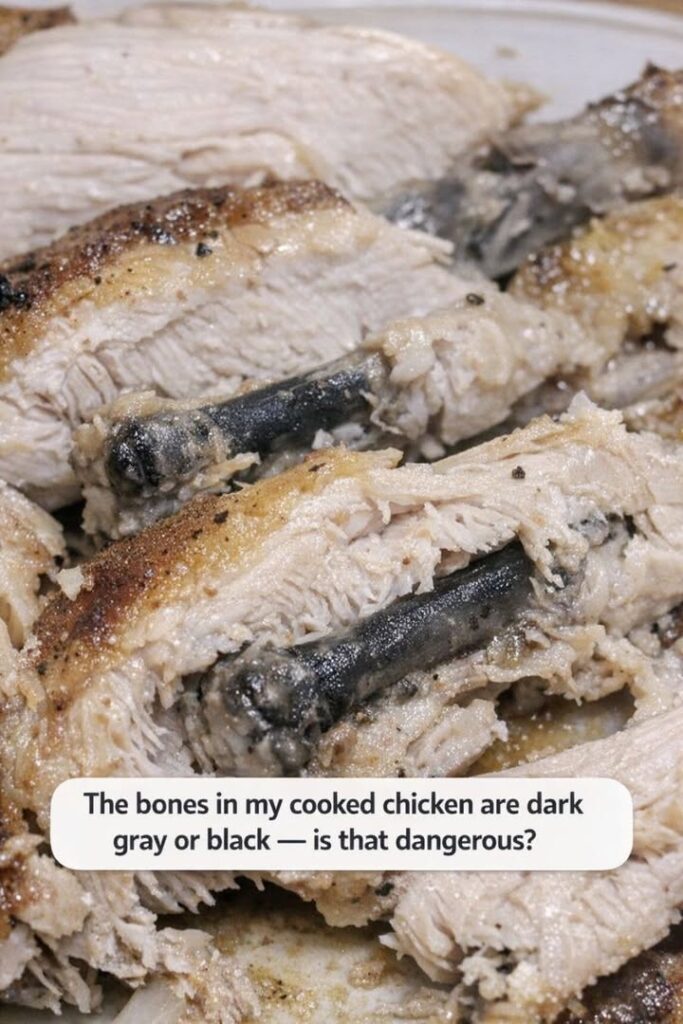
Dark gray or black chicken bones may look unusual, but they are usually the result of natural bone marrow pigmentation, particularly in young or previously frozen chickens. In most cases, they do not indicate spoilage or undercooking.
Rather than judging chicken by bone color, rely on proven food safety practices: cook poultry to an internal temperature of 165°F (74°C), inspect the meat for signs of spoilage, and store it properly before cooking.
With proper preparation and safe cooking techniques, you can enjoy chicken confidently—even if the bones appear darker than expected.
ADVERTISEMENT