ADVERTISEMENT
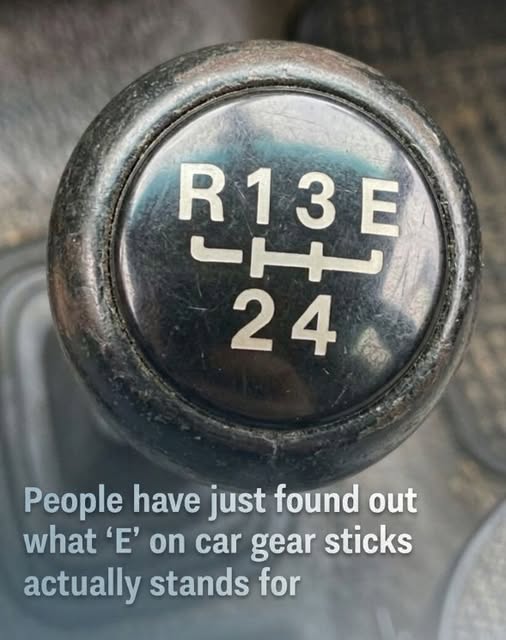
Have you ever seen an “E” on an older car’s gear selector? Discover what Economy Mode was, how it worked, why automakers used it, and why it disappeared from modern vehicles.
What Does the “E” on an Old Car’s Gear Shift Mean? A Forgotten Feature from Automotive History
A few years ago, I found myself sitting behind the wheel of an older sedan and staring at the gear selector in complete confusion.
Like most drivers, I was familiar with the standard transmission markings:
ADVERTISEMENT
- P for Park
- R for Reverse
- N for Neutral
- D for Drive
But this vehicle had something different.
Alongside the familiar letters was an unexpected “E.”
At first, I assumed it might stand for “Electric” or perhaps some rarely used transmission setting. After all, modern vehicles are filled with advanced driving modes and electronic systems.
The real answer turned out to be far more interesting.
That mysterious “E” stood for Economy Mode, an early fuel-saving feature that appeared on many vehicles before modern computerized transmissions became standard.
Today, many younger drivers have never encountered it, making it one of the most overlooked features in automotive history.
What Did the “E” Actually Mean?
The letter “E” stood for Economy.
Economy Mode was designed to improve fuel efficiency by changing how the automatic transmission shifted gears.
When selected, the transmission would:
- Shift into higher gears sooner
- Keep engine RPM lower
- Reduce fuel consumption during normal driving
- Prioritize efficiency over acceleration
The concept was simple: use less fuel by encouraging the engine to work at lower speeds whenever possible.
Why Was Economy Mode Introduced?
Economy Mode became increasingly popular during the fuel-conscious decades of the 1970s and 1980s.
Several factors contributed to its adoption:
Rising Fuel Prices
Fuel costs increased significantly during energy crises, encouraging drivers and manufacturers to focus on efficiency.
Improved Fuel Economy Standards
Automakers were under growing pressure to improve vehicle fuel efficiency.
Consumer Demand
Drivers wanted practical ways to reduce fuel expenses without purchasing an entirely new vehicle.
Economy Mode offered a simple solution that required no major changes in driving habits.
How Did Economy Mode Work?
Unlike today’s sophisticated drive modes controlled by computers, early Economy Mode systems were relatively straightforward.
When activated, the transmission would:
Shift Earlier
The vehicle would upshift sooner than normal.
Hold Higher Gears Longer
The transmission avoided unnecessary downshifts whenever possible.
Reduce Engine Speed
Lower RPM generally meant reduced fuel consumption during steady cruising.
Smooth Out Driving Behavior
Acceleration often felt more gradual because the transmission prioritized efficiency rather than responsiveness.
What Did Driving in Economy Mode Feel Like?
See more on the next page to continue reading →
ADVERTISEMENT
ADVERTISEMENT