ADVERTISEMENT
Keeping weeds under control is one of the biggest challenges for homeowners and gardeners. Whether they appear between patio pavers, along sidewalks, in gravel driveways, or around fence lines, unwanted weeds seem to return no matter how often they’re removed.
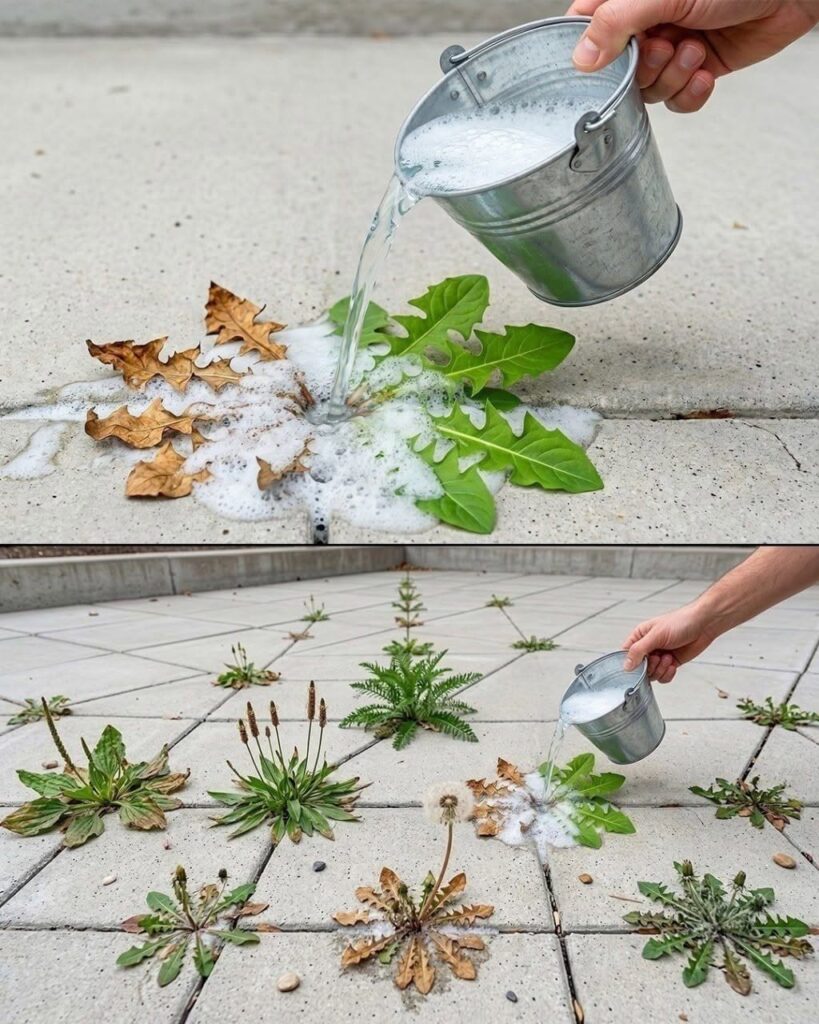
Many people are looking for alternatives to synthetic herbicides, especially for small areas around the home. A popular homemade weed killer combines white vinegar, salt, citric acid, and liquid dish soap. These common household ingredients can create an effective contact weed spray that quickly damages exposed weeds.
However, it’s important to understand both the benefits and the limitations of this DIY solution. While it may be useful in certain situations, it should be used carefully to avoid unintended damage to soil and desirable plants.
ADVERTISEMENT
Why Are Weeds So Hard to Eliminate?
Weeds are highly adaptable plants that thrive in difficult conditions. Many species can:
- Grow rapidly
- Produce thousands of seeds
- Develop extensive root systems
- Survive drought
- Spread through underground roots or rhizomes
Because of these survival strategies, simply removing the visible leaves often isn’t enough. Many perennial weeds can regrow from roots left beneath the soil.
Ingredients in This Homemade Weed Killer
This natural weed spray contains four simple ingredients:
- White vinegar
- Table salt
- Citric acid
- Liquid dish soap
Each ingredient serves a different purpose.
White Vinegar
White vinegar contains acetic acid, which damages plant tissue on contact.
When sprayed directly onto leaves, it removes moisture from surface cells, causing weeds to wilt and dry out.
Vinegar works best on young, actively growing weeds during warm, sunny weather.
Salt
Salt helps draw water out of plant cells through osmosis, making it difficult for weeds to survive.
Although effective, salt should be used sparingly because it can remain in the soil and affect future plant growth.
Citric Acid
Citric acid increases the acidity of the solution and may enhance its ability to damage exposed plant tissue.
It works together with vinegar to improve the overall contact effect.
Liquid Dish Soap
Leaves naturally have a waxy coating that causes water to bead up and roll away.
A small amount of dish soap acts as a surfactant, helping the solution spread evenly and cling to the leaves for better coverage.
What This Homemade Weed Killer Can Do
See more on the next page to continue reading →
ADVERTISEMENT