What This Homemade Weed Killer Can Do
ADVERTISEMENT
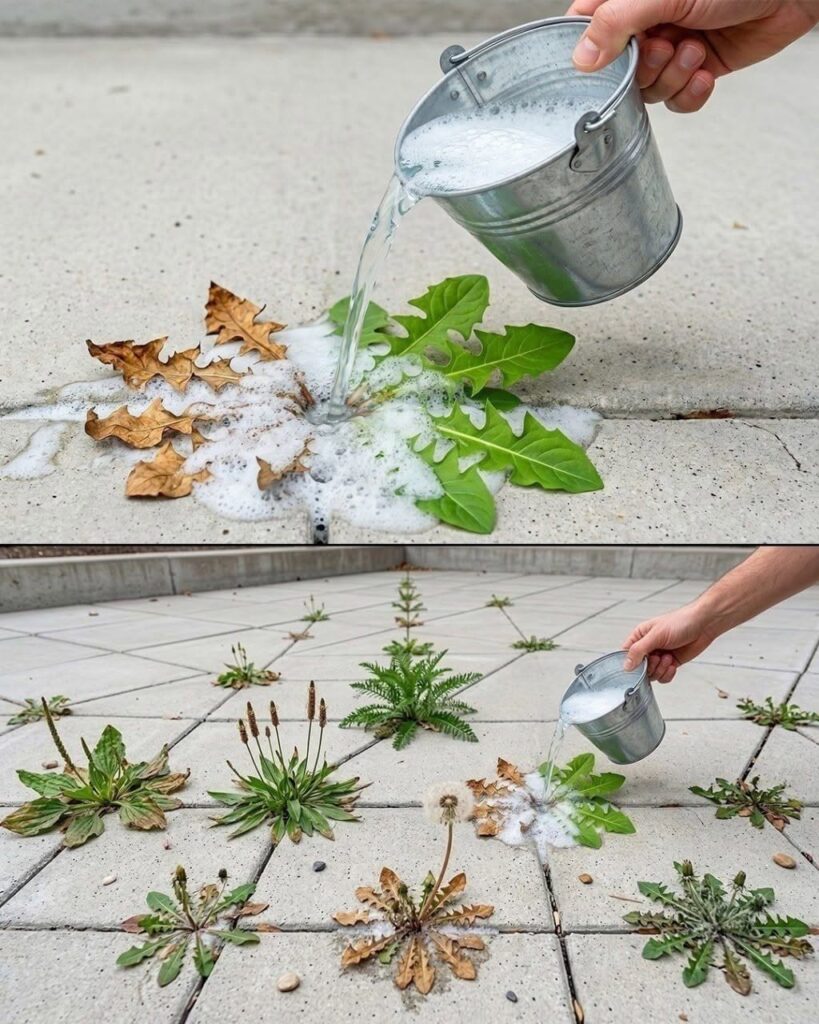
This mixture works as a contact herbicide, meaning it damages only the plant parts it touches.
You may notice:
- Wilting within several hours
- Browning leaves after 24–48 hours
- Dry, dead-looking foliage within a few days
It works particularly well on:
ADVERTISEMENT
- Young annual weeds
- Small weeds growing in cracks
- Surface vegetation in gravel or pavement joints
What It Cannot Do
Unlike many commercial systemic herbicides, this homemade spray usually does not travel into the root system.
Deep-rooted perennial weeds may survive and produce new growth after a few weeks.
Examples include:
- Dandelions
- Bindweed
- Bermuda grass
- Canada thistle
These weeds often require repeated treatments or physical removal.
Homemade Weed Killer Recipe
Ingredients
- 300 ml water
- 200 ml white vinegar
- 1 tablespoon table salt
- 1 tablespoon citric acid
- 1 tablespoon liquid dish soap
- 1 additional liter of water for dilution
Instructions
- Combine the water and vinegar in a large container.
- Add the salt and stir until dissolved.
- Mix in the citric acid.
- Add the dish soap last and stir gently to avoid excessive foaming.
- Dilute with the remaining liter of water.
- Pour the mixture into a clean spray bottle or garden sprayer.
If any particles remain, strain the solution before filling the sprayer.
How to Apply It
For best results:
- Spray on a warm, dry, sunny day.
- Apply directly to the leaves until thoroughly coated.
- Avoid spraying before rain, which can wash the solution away.
- Repeat as needed if weeds regrow.
Direct sunlight often improves the effectiveness of vinegar-based sprays.
Best Places to Use This Spray
This homemade solution is most appropriate for areas where you do not want vegetation to grow, including:
- Driveway cracks
- Sidewalk edges
- Gravel paths
- Patio joints
- Fence lines
- Stone walkways
These locations are less likely to be affected by temporary soil changes.
Areas to Avoid
Avoid spraying near:
- Vegetable gardens
- Flower beds
- Newly planted trees
- Shrubs
- Lawns
- Healthy ornamental plants
The spray cannot distinguish between weeds and desirable plants and may damage any foliage it contacts.
Important Safety Considerations
Although the ingredients are commonly found in kitchens, they should still be handled responsibly.
Keep in mind:
- Salt may accumulate in soil and reduce its ability to support future plant growth.
- Vinegar can irritate the eyes and skin.
- Wear gloves and eye protection during application.
- Store the mixture out of reach of children and pets.
- Never mix homemade weed killers with bleach or other household chemicals.
Using excessive amounts repeatedly in the same location can permanently affect soil quality.
Additional Weed Prevention Tips
Preventing weeds is often easier than removing them.
Consider these strategies:
- Apply mulch around garden plants.
- Pull weeds before they produce seeds.
- Seal cracks in sidewalks and driveways.
- Improve lawn health to crowd out weeds.
- Install landscape fabric beneath gravel or decorative stone.
Combining prevention with occasional spot treatments usually provides the best long-term results.
Frequently Asked Questions
Does homemade weed killer kill weeds permanently?
Not always.
It effectively kills exposed foliage but may not eliminate deep roots, especially in perennial weeds.
How long does it take to work?
Most weeds begin wilting within a few hours, with visible browning appearing within one to two days.
Is this safe for pets?
Keep pets away until the spray has completely dried. Although the ingredients are common household products, direct contact with concentrated vinegar or salt solutions may cause irritation.
Can I use it in my vegetable garden?
It’s generally not recommended, as the solution may damage nearby crops and repeated salt use can negatively affect soil health.
Final Thoughts
This homemade natural weed killer offers an affordable and convenient option for controlling small weeds in driveways, patios, sidewalks, and gravel areas. Thanks to the combined action of vinegar, citric acid, salt, and dish soap, it can quickly dry out unwanted vegetation without relying on synthetic herbicides.
However, it works best as a contact treatment, not a complete root killer. For persistent perennial weeds, repeated applications or manual removal may still be necessary. By using this solution carefully and only where appropriate, you can maintain a cleaner outdoor space while minimizing unnecessary impact on surrounding plants and soil.
ADVERTISEMENT