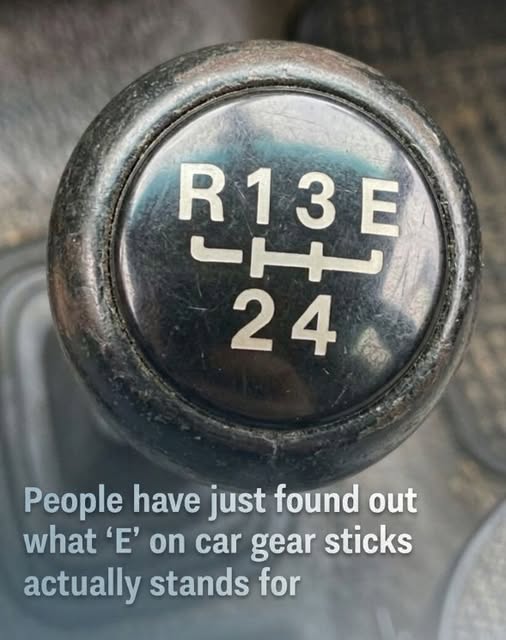
What Did Driving in Economy Mode Feel Like?
ADVERTISEMENT
Drivers often noticed several differences:
Better Fuel Economy
The primary benefit was reduced fuel consumption during daily driving.
Less Aggressive Acceleration
Vehicles felt more relaxed when pulling away from a stop.
ADVERTISEMENT
Lower Engine Noise
Because the engine operated at lower RPM, the cabin often felt quieter.
Smoother Highway Cruising
Economy Mode was particularly useful during long-distance travel and commuting.
The tradeoff was slightly slower acceleration when quick power was needed.
Why Did the “E” Disappear?
As automotive technology advanced, dedicated Economy Mode settings became less common.
Modern vehicles now use sophisticated computer systems that automatically adjust:
- Transmission shift points
- Engine timing
- Fuel delivery
- Throttle response
Rather than requiring drivers to manually select Economy Mode, today’s vehicles continuously optimize performance and efficiency in real time.
Many modern cars now offer selectable driving modes such as:
- Eco
- Normal
- Comfort
- Sport
- Sport Plus
These systems perform the same basic function as the old “E” mode—but with significantly greater precision.
Is Economy Mode Still Used Today?
Absolutely.
While the letter “E” may no longer appear on most gear selectors, the concept remains alive in modern vehicles.
Many current cars feature:
- Eco Mode buttons
- Fuel-saving drive settings
- Intelligent transmission programming
- Hybrid efficiency systems
Modern versions simply operate through software rather than dedicated transmission positions.
Other Uncommon Gear Selector Letters Found on Older Cars
Older vehicles sometimes included additional transmission settings such as:
L (Low)
Provides extra torque for steep hills or towing.
2
Limits the transmission to lower gears.
S (Sport)
Prioritizes performance and acceleration.
OD (Overdrive)
Improves fuel economy during highway driving.
Each represented an era when drivers had more direct control over automatic transmission behavior.
Frequently Asked Questions
What does “E” stand for on an old automatic transmission?
The letter “E” typically stands for Economy Mode, a setting designed to improve fuel efficiency by changing transmission shift patterns.
Did Economy Mode save fuel?
Yes. Under normal driving conditions, Economy Mode often improved fuel economy by reducing engine RPM and encouraging earlier upshifts.
Is Economy Mode the same as modern Eco Mode?
The goal is similar, but modern Eco systems use advanced computer controls to optimize multiple vehicle systems simultaneously.
Why don’t modern gear shifters use “E” anymore?
Modern vehicles generally integrate fuel-saving strategies into computerized drive modes rather than separate transmission positions.
Final Thoughts
The mysterious “E” found on some older gear selectors represents a fascinating chapter in automotive history. Long before modern drive modes and intelligent transmission software, Economy Mode offered drivers a practical way to improve fuel efficiency during everyday driving.
Although the letter has largely disappeared from modern vehicles, its purpose lives on through today’s Eco Modes and fuel-saving technologies.
The next time you spot an older car with an “E” on the gear selector, you’ll know it isn’t a mystery at all—it’s an early example of the automotive industry’s long pursuit of better fuel economy.
ADVERTISEMENT