Common Moisture Sources Behind Bubbling Paint
ADVERTISEMENT
Moisture can enter walls in several ways, including:
Plumbing Leaks
Even a tiny leak inside a pipe can slowly soak drywall without becoming immediately visible.
Roof Leaks
Damaged roofing materials or flashing may allow rainwater to travel through ceilings and walls.
ADVERTISEMENT
Condensation
Poor insulation combined with warm indoor air often creates condensation inside wall cavities.
Foundation Moisture
Older homes without effective waterproofing may experience rising damp, allowing groundwater to move upward through masonry by capillary action.
Finding the moisture source is far more important than simply repainting the wall.
Warning Signs of a Hidden Wall Leak
Bubbling paint often appears alongside other symptoms that suggest concealed water damage.
Watch for:
- Water stains
- Soft drywall
- Peeling paint
- Mold growth
- Musty odors
- Cracked plaster
- Warped baseboards
If several of these warning signs appear together, it’s wise to inspect the area before cosmetic repairs begin.
Could Rising Damp Be the Problem?
Rising damp mainly affects older buildings where moisture barriers have deteriorated or were never installed.
Typical signs include:
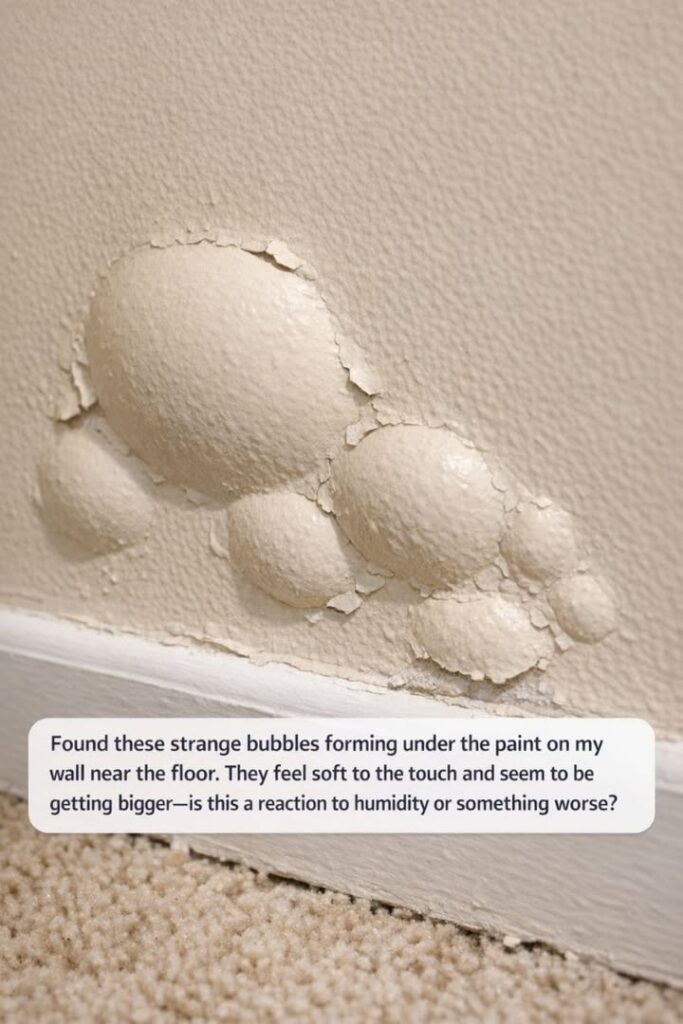
- Bubbling paint near floor level
- White powdery salt deposits
- Damp lower walls
- Peeling wallpaper
- Persistent musty smells
A moisture meter can help identify whether moisture levels are highest near the floor, which is a common indicator of rising damp.
Other Reasons Paint Starts Bubbling
Not every paint bubble results from water damage.
Other common causes include:
- Painting over dirty surfaces
- Applying paint before walls are completely dry
- Using expired paint
- Painting during extremely hot or humid weather
- Skipping primer
- Incompatible paint products
- Poor surface preparation
Professional surface preparation remains one of the most effective ways to ensure long-lasting paint adhesion.
Simple Tests You Can Perform
Before contacting a contractor, you can perform several basic checks.
Foil Test
Tape a square of aluminum foil tightly against the affected wall for 24 hours.
- Moisture behind the foil usually indicates water inside the wall.
- Moisture on the room side suggests excessive indoor humidity.
Inspect Nearby Plumbing
Check sinks, toilets, showers, and water supply lines for slow leaks.
Look Outside
Inspect gutters, downspouts, siding, and roof areas where rainwater could enter the home.
These simple inspections can narrow down the likely source before more advanced diagnostics become necessary.
What to Do Immediately
Taking quick action can prevent a minor issue from becoming a major home repair project.
Recommended steps include:
- Improve ventilation by opening windows or using exhaust fans.
- Run a dehumidifier if indoor humidity is high.
- Remove loose or bubbling paint carefully.
- Allow the wall to dry completely.
- Repair any plumbing or roof leaks promptly.
- Avoid repainting until the underlying moisture problem has been resolved.
Ignoring trapped moisture may lead to mold growth, damaged insulation, and expensive structural repairs.
How Professionals Diagnose Moisture Problems
When the source isn’t obvious, home repair specialists use advanced tools to locate hidden moisture without unnecessary demolition.
Common methods include:
- Thermal imaging cameras
- Electronic moisture meters
- Leak detection equipment
- Infrared inspections
- Selective drywall removal when necessary
These techniques help identify concealed leaks while minimizing damage to finished walls.
Repair Options
The appropriate repair depends entirely on the underlying cause.
For humidity-related bubbling:
- Dry the wall completely.
- Sand away damaged paint.
- Apply a high-quality stain-blocking primer.
- Repaint using moisture-resistant interior paint.
For water intrusion:
- Repair the leak first.
- Replace damaged drywall if necessary.
- Treat any mold growth.
- Restore insulation if it has become saturated.
- Prime and repaint only after the wall has fully dried.
Attempting cosmetic repairs before fixing moisture intrusion usually results in the bubbles returning.
Preventing Paint Bubbles in the Future
Preventive maintenance is the most effective long-term solution.
To protect your walls:
- Maintain indoor humidity between 30% and 50%.
- Install or maintain bathroom and kitchen exhaust fans.
- Inspect roofs and plumbing regularly.
- Keep gutters clean.
- Repair exterior cracks promptly.
- Use premium moisture-resistant paint in high-humidity areas.
- Address water leaks as soon as they appear.
These preventive measures help extend the life of your paint while protecting your home’s structure from costly moisture damage.
Final Thoughts
Soft bubbles under wall paint are more than a cosmetic annoyance—they’re often an early warning sign of excess moisture. While high humidity can sometimes be the cause, persistent bubbling may indicate hidden plumbing leaks, roof damage, condensation, or rising damp.
The key is to identify and eliminate the source of moisture before repainting. By combining regular home maintenance, proper ventilation, and timely repairs, homeowners can prevent recurring paint damage, preserve indoor air quality, and avoid expensive restoration projects in the future.
ADVERTISEMENT