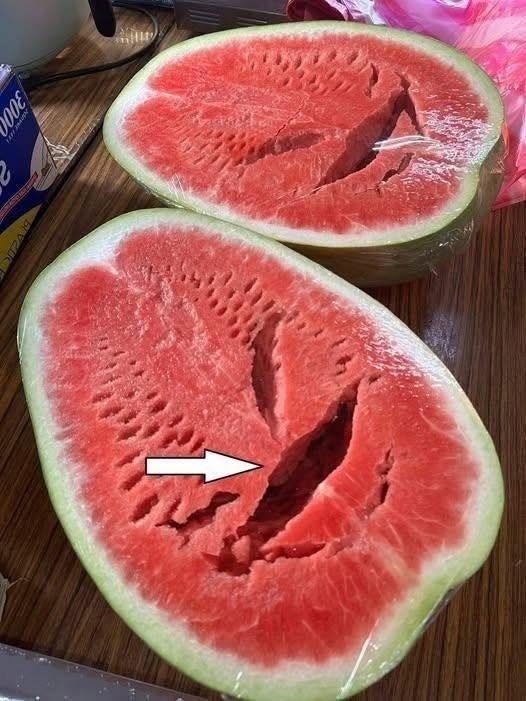
Is Cracked Watermelon Safe to Eat?
ADVERTISEMENT
In most cases, yes.
A watermelon with hollow heart or internal cracks is generally considered safe to consume if:
✅ It smells fresh
ADVERTISEMENT
✅ The flesh remains bright and vibrant
✅ There is no mold present
✅ The watermelon has been properly stored
✅ There are no signs of fermentation or spoilage
The texture may be less appealing, but safety is usually not affected.
When You Should Throw It Away
Discard the watermelon if you notice any of the following:
Sour or Fermented Odor
Fresh watermelon should smell sweet and clean.
A sour, alcoholic, or fermented smell indicates spoilage.
Slimy Texture
Healthy watermelon flesh should be juicy but not slimy.
Mold Growth
Any visible mold means the fruit should be discarded immediately.
Dark or Discolored Areas
Brown, black, or unusually dark patches can signal deterioration.
Fizzy or Bubbling Flesh
Fermentation can create bubbles or unusual fizzing within the fruit.
If any of these signs are present, it’s best not to eat the watermelon.
How to Pick a Better Watermelon
While no method guarantees perfection, these tips can improve your chances of selecting a sweet, high-quality melon.
Look for a Creamy Yellow Field Spot
The field spot is where the watermelon rested on the ground.
A creamy yellow color indicates it ripened naturally on the vine.
Choose a Heavy Melon
A ripe watermelon should feel heavier than it appears.
Extra weight often means higher water content and better juiciness.
Inspect the Surface
Avoid watermelons with:
- Deep cuts
- Soft spots
- Cracks in the rind
- Significant bruising
Listen for a Deep Sound
A gentle tap should produce a deep, hollow sound rather than a dull thud.
Proper Watermelon Storage Matters
Even a perfect watermelon can lose quality if stored improperly.
Whole Watermelon
Store at cool room temperature until cut.
Cut Watermelon
- Refrigerate immediately
- Keep covered in an airtight container
- Consume within 3–5 days
Proper storage helps maintain texture, sweetness, and freshness.
The Bottom Line
Finding cracks or hollow spaces inside a watermelon can be surprising, but it doesn’t automatically mean the fruit is dangerous.
In most cases, internal cracking is caused by natural growing conditions, rapid development, or pollination issues rather than contamination or chemical treatment.
However, if the watermelon shows signs of spoilage—such as mold, foul odors, sliminess, or fermentation—it should be discarded.
The best approach is simple: inspect the fruit carefully, trust your senses, and choose watermelons that look, smell, and taste fresh.
A few internal cracks may affect texture, but they don’t necessarily mean your summer favorite belongs in the trash.
ADVERTISEMENT