ADVERTISEMENT
Found cracks, hollow spots, or unusual texture inside your watermelon? Learn the real causes of internal watermelon cracking, whether it’s safe to eat, and how to choose the best watermelon every time.
You Cut Open Your Watermelon and Saw Cracks Inside—Should You Be Worried?
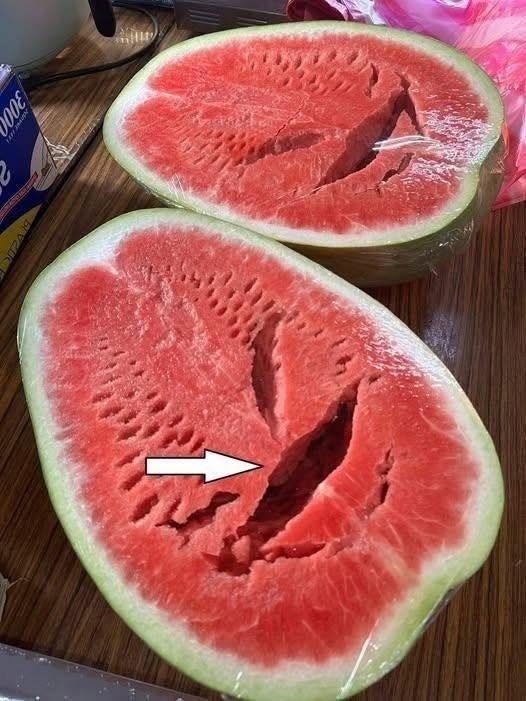
Few things are more disappointing than bringing home what seems like the perfect watermelon, only to discover something unexpected when you slice it open.
Maybe the flesh looks cracked. Perhaps there are hollow spaces running through the center. Or maybe the texture seems loose, grainy, or spongy instead of firm and juicy.
ADVERTISEMENT
Naturally, questions arise:
- Is the watermelon safe to eat?
- Did it spoil?
- Was it grown using chemicals?
- Should it be thrown away?
The good news is that internal cracks in watermelon are usually a quality issue rather than a serious health concern. However, understanding why they occur can help you make better choices when selecting and storing watermelon.
What Causes Cracks and Hollow Spaces Inside Watermelons?
Internal cracking, sometimes called hollow heart, occurs when the flesh separates during the fruit’s development.
This condition can create:
- Cracks in the red flesh
- Hollow cavities
- Uneven texture
- Areas that appear dry or grainy
In many cases, the watermelon remains edible, but the eating quality may be reduced.
The Most Common Cause: Hollow Heart Disorder
One of the leading causes of internal watermelon cracking is a natural condition known as hollow heart.
Hollow heart develops when the fruit grows rapidly and the internal flesh cannot keep pace with the expanding rind.
Several factors may contribute:
Poor Pollination
Watermelons rely on pollinators to develop properly. Inadequate pollination can cause uneven fruit growth, leading to hollow areas inside the melon.
Rapid Growth Conditions
Sudden changes in:
- Temperature
- Rainfall
- Irrigation
- Nutrient availability
can cause the fruit to expand too quickly, resulting in internal separation.
Variety Differences
Some watermelon varieties are naturally more prone to developing hollow heart than others.
What About Growth Regulators Like CPPU?
Some articles claim that internal cracks automatically indicate the use of chemical growth regulators such as forchlorfenuron (CPPU).
The reality is more complex.
CPPU is a plant growth regulator used in some agricultural systems to improve fruit size and yield. While excessive or improper use may contribute to abnormal fruit development, internal cracking alone does not prove that a watermelon was treated with CPPU.
Experts note that hollow heart commonly occurs in watermelons grown without growth regulators as well.
Therefore, seeing cracks inside a watermelon should not automatically lead to the conclusion that chemicals were involved.
Is Cracked Watermelon Safe to Eat?
See more on the next page to continue reading →
ADVERTISEMENT