ADVERTISEMENT
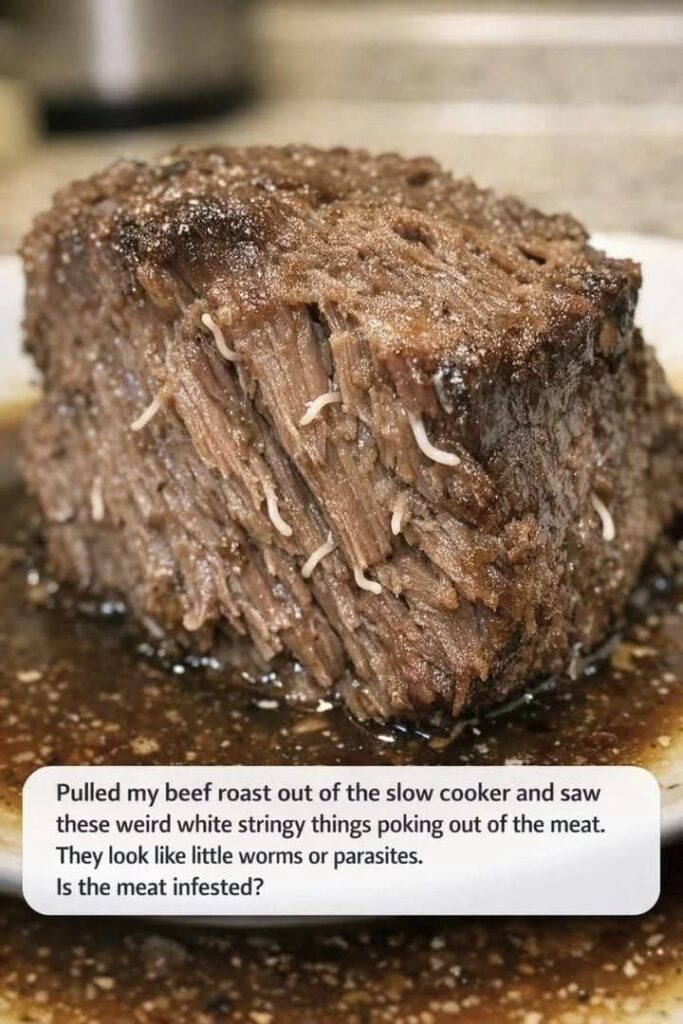
Noticed white stringy bits in your pot roast or slow-cooked beef? Learn what causes these unusual strands, when they’re perfectly normal, and the signs that indicate your meat may have spoiled.
You Spent Hours Slow-Cooking a Roast—Then Noticed Strange White Strings Inside
You’ve waited all day for dinner.
The aroma of slow-cooked beef has filled the house for hours, and the roast looks perfectly tender. You grab a fork, pull apart the meat, and suddenly notice something unexpected.
ADVERTISEMENT
Thin white strings.
Maybe they’re woven through the beef. Maybe they’re clustered in certain areas. Either way, they don’t look like what you expected.
Your first thought might be:
“Is this normal?”
Before tossing out an entire roast, it’s worth understanding what these white stringy bits usually are—and why they often appear in slow-cooked beef.
The Good News: They’re Usually a Natural Part of the Meat
In most cases, white stringy strands found in cooked beef are simply connective tissue that has become visible during cooking.
Beef contains several natural structures, including:
- Muscle fibers
- Fat
- Tendons
- Connective tissue
- Collagen
When beef cooks slowly over several hours, these components change dramatically in texture and appearance.
The white strands you’re seeing are often collagen-rich connective tissues that have softened during the cooking process.
What Is Connective Tissue?
See more on the next page to continue reading →
ADVERTISEMENT