What Is Connective Tissue?
ADVERTISEMENT
Connective tissue acts as the body’s internal support system.
In cattle, it helps:
- Hold muscles together
- Connect muscles to bones
- Provide strength and flexibility
Collagen is the primary protein found in connective tissue.
ADVERTISEMENT
Cuts that come from hardworking muscles—such as chuck roast, brisket, and shoulder cuts—naturally contain higher amounts of collagen.
That’s why they’re perfect for slow cooking.
Why Slow Cooking Makes These Strands More Visible
One of the biggest advantages of slow cooking is its ability to transform tough cuts of beef into fork-tender meals.
As the meat cooks:
- Muscle fibers gradually relax.
- Collagen begins to break down.
- Connective tissue softens.
- Gelatin forms, creating a rich texture.
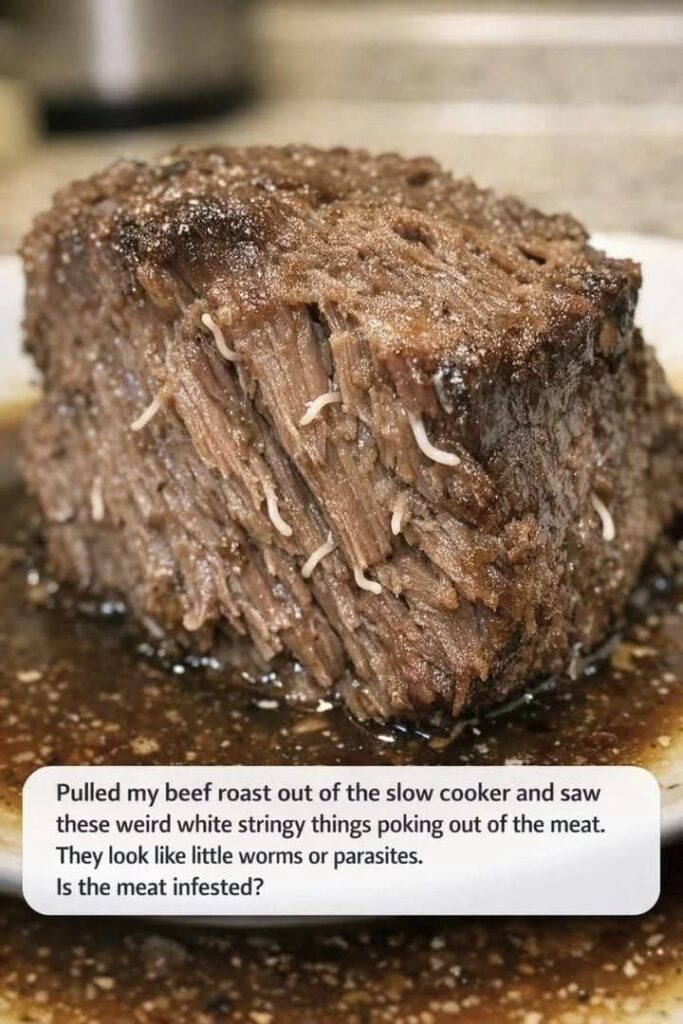
During this transformation, some connective tissue may become more visible as thin white strands throughout the roast.
Far from being a defect, it’s often a sign that the collagen-rich tissues are breaking down exactly as they should.
Common Cuts Most Likely to Show White Strings
Certain cuts naturally contain more connective tissue than others.
These include:
Chuck Roast
A classic slow-cooker favorite known for rich flavor and tenderness after long cooking.
Brisket
Packed with collagen that melts during extended cooking.
Beef Shoulder
A hardworking muscle group that benefits from low-and-slow cooking methods.
Short Ribs
Loaded with connective tissue that transforms into rich gelatin.
If you’re cooking any of these cuts, seeing white strands is usually completely normal.
Normal White Strings vs. Signs of Spoilage
It’s important to distinguish harmless connective tissue from genuine signs that meat may be unsafe.
Usually Normal
- Thin white strands
- Soft or gelatin-like texture
- Easily pulled apart with a fork
- No unusual odor
- Consistent meat color
Possible Warning Signs
- Sour or unpleasant smell
- Sticky or slimy surface
- Green, gray, or unusual discoloration
- Excessive moisture or slime
- Mold growth
If the beef smells fresh and looks normal aside from the white strands, there’s typically no cause for concern.
Safe Cooking Temperatures for Beef
Proper cooking helps ensure both quality and food safety.
General recommendations include:
- Whole cuts of beef: Minimum internal temperature of 145°F (63°C) followed by a rest period.
- Ground beef: 160°F (71°C).
Slow-cooked roasts often exceed these temperatures due to long cooking times, resulting in exceptionally tender meat.
Using a meat thermometer remains the most reliable way to confirm doneness.
Why Some Roasts Have More White Strands Than Others
Several factors influence how much connective tissue appears in cooked beef:
The Cut of Meat
More active muscles contain more collagen.
Animal Age
Older animals generally develop more connective tissue.
Cooking Method
Slow cooking highlights collagen breakdown more than grilling or quick searing.
Marbling and Structure
Each roast is slightly different, even within the same cut.
This explains why one pot roast may show more visible strands than another.
Tips for Better Slow-Cooked Beef
For the most tender results:
- Choose collagen-rich cuts like chuck roast.
- Cook low and slow whenever possible.
- Avoid rushing the process with high heat.
- Let the meat rest before serving.
- Slice against the grain if not shredding.
These techniques help maximize tenderness while creating the rich texture that makes slow-cooked beef so popular.
The Bottom Line
Finding white stringy bits in your slow-cooked beef can be surprising, but they’re usually nothing more than connective tissue and collagen that have become visible during cooking.
In fact, these strands are often associated with the very cuts that produce the most flavorful and tender roasts.
As long as the meat smells fresh, looks normal, and has been cooked properly, those white strings are typically a natural part of the cooking process—not a reason to throw away dinner.
ADVERTISEMENT