When Puffy Packaging Is Normal
ADVERTISEMENT
Some foods naturally contain trapped gas because of the way they’re packaged.
Examples include:
ADVERTISEMENT
- Potato chips
- Tortilla chips
- Pretzels
- Certain breakfast cereals
If the package was puffed when you bought it, the expiration date is valid, and there are no signs of damage, it’s generally nothing to worry about.
When Bloated Packaging Could Be a Warning Sign
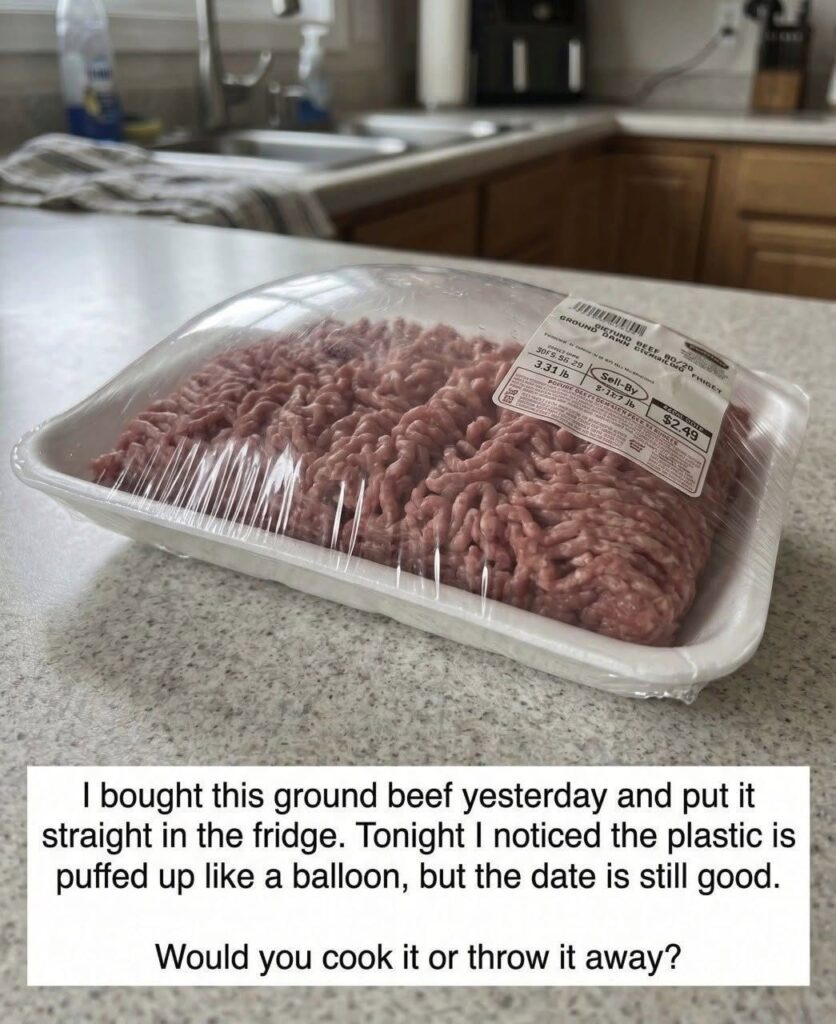
A package that suddenly becomes swollen—especially if it wasn’t originally puffed—deserves extra attention.
In some cases, microorganisms inside spoiled food produce gases such as carbon dioxide, causing the package to expand.
This may happen with:
- Fresh meat
- Seafood
- Ready-to-eat meals
- Dairy products
While bloating doesn’t automatically mean the food is dangerous, it can indicate spoilage or bacterial growth.
Signs a Food Package Should Be Discarded
Avoid consuming food if you notice:
- Packaging that has become unusually swollen.
- Leaks or damaged seals.
- A foul or sour odor when opened.
- Mold or unusual discoloration.
- Slimy or sticky texture.
- The product is past its expiration or use-by date.
When in doubt, it’s safest to throw it out.
Can Harmful Bacteria Cause Packaging to Swell?
Yes, some bacteria produce gas as they grow.
Certain spoilage microorganisms generate carbon dioxide or other gases that inflate sealed containers.
However, not all dangerous bacteria produce gas, and not every swollen package contains harmful bacteria.
Because it’s impossible to tell simply by looking, food safety experts recommend avoiding foods in damaged or unexpectedly bloated packaging.
Tips for Food Safety
To help keep your food safe:
- Store refrigerated foods at 40°F (4°C) or below.
- Freeze foods promptly if you won’t use them soon.
- Check packaging before purchasing.
- Never buy products with broken seals or damaged containers.
- Follow expiration and use-by dates.
- Refrigerate perishable foods promptly after shopping.
Frequently Asked Questions
Are chip bags really filled with air?
Not exactly. Most manufacturers use nitrogen gas, which helps protect the chips and preserve freshness.
Is swollen packaging always dangerous?
No. Some foods are intentionally packaged with gas. However, unexpected swelling in refrigerated or vacuum-sealed foods may indicate spoilage.
Should I eat food from a bloated package?
If the packaging appears unusually swollen and wasn’t designed that way, it’s best not to eat the product. When in doubt, discard it.
Final Thoughts
Not all puffed food packages are cause for concern. Snack foods like chips are intentionally packaged with nitrogen to keep them fresh and protect them from damage during transport. On the other hand, unexpected swelling in vacuum-sealed or refrigerated foods can sometimes signal spoilage caused by gas-producing microorganisms.
Understanding the difference can help you make safer choices in the kitchen. When a package looks unusual, smells off, or shows signs of damage, it’s always better to err on the side of caution and replace the product rather than risk foodborne illness.