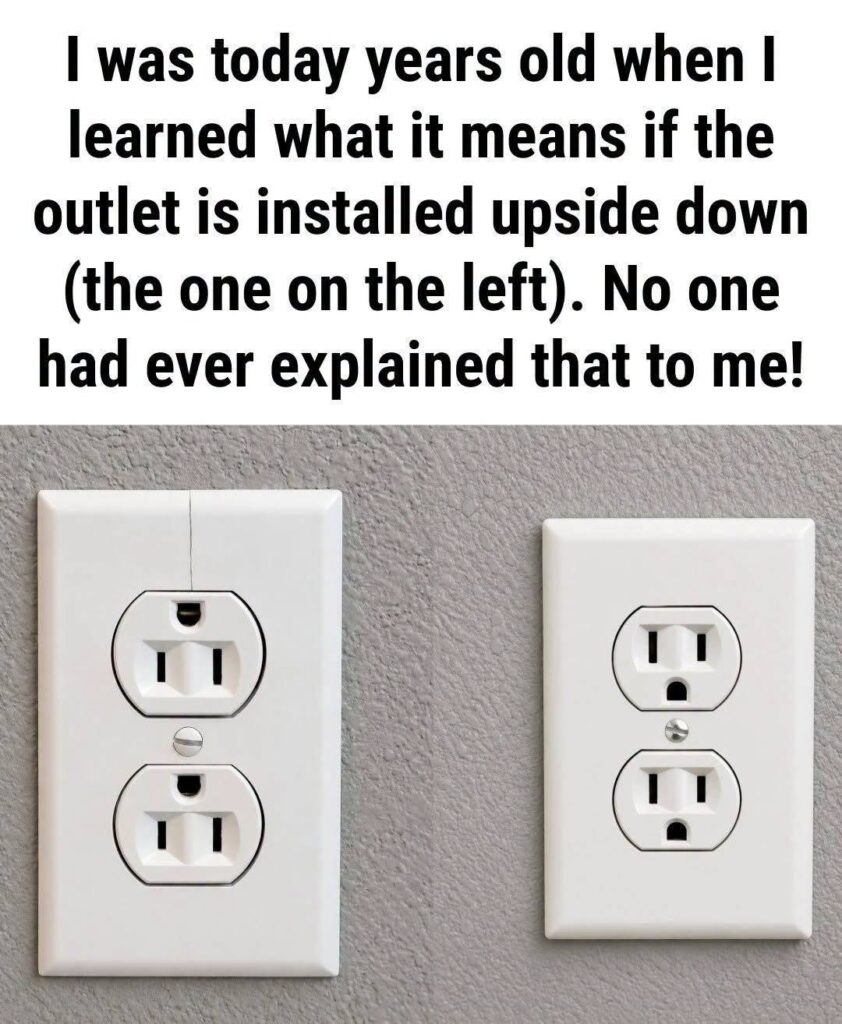
Why Is an Electrical Outlet Installed Upside Down?
ADVERTISEMENT
If you’ve ever noticed an electrical outlet installed upside down, you may have wondered whether it was a mistake. Since most outlets are installed with the grounding hole at the bottom, a flipped outlet naturally catches your attention.
The good news is that an upside-down outlet isn’t necessarily a sign of poor workmanship. In many homes, it’s an intentional installation used to indicate a switch-controlled outlet. However, that’s not always the case.
Understanding why an outlet is installed in a different orientation can help you use your home’s electrical system more effectively while avoiding unnecessary concerns.
ADVERTISEMENT
What Does an Upside-Down Outlet Usually Mean?
One of the most common reasons an outlet is installed upside down is to identify a switched receptacle.
A switched outlet is connected to a nearby wall switch, allowing you to control power without unplugging devices. This setup is especially common in:
- Living rooms
- Bedrooms
- Older homes
- Family rooms
- Finished basements
Before ceiling lights became standard in many homes, builders often installed switched outlets so homeowners could plug in table lamps or floor lamps and control them with a wall switch.
In many cases, only one half of the outlet is controlled by the switch, while the other half remains powered continuously.
This allows you to:
- Plug a lamp into the switched outlet.
- Keep a phone charger or alarm clock connected to the always-on outlet.
Is Every Upside-Down Outlet Switch-Controlled?
No.
Although many electricians use this installation method as a visual indicator, there is no national electrical code that requires switched outlets to be installed upside down in residential homes.
Outlet orientation often depends on:
- Electrician preference
- Local building practices
- Homeowner requests
- Previous renovations
Sometimes an outlet may simply have been installed upside down during a replacement, with no special purpose at all.
For this reason, you should never assume an upside-down outlet has a particular function without testing it.
How to Test a Switched Outlet Safely
Fortunately, checking whether an outlet is controlled by a wall switch is simple and doesn’t require opening the outlet or handling electrical wiring.
Step 1
Plug a lamp into one receptacle.
Step 2
Turn the lamp on.
Step 3
Flip nearby wall switches.
If the lamp turns on and off, you’ve found a switched outlet.
Step 4
If nothing happens, test the second receptacle.
Many split outlets have only one powered by the switch.
If neither side responds, the switch may control:
- Another outlet
- An outdoor light
- A ceiling fixture
- A different electrical circuit
Why Do Some Electricians Install Outlets Ground-Up?
See more on the next page to continue reading →
ADVERTISEMENT