White Foam on Burgers While Cooking: Should You Be Concerned?
ADVERTISEMENT
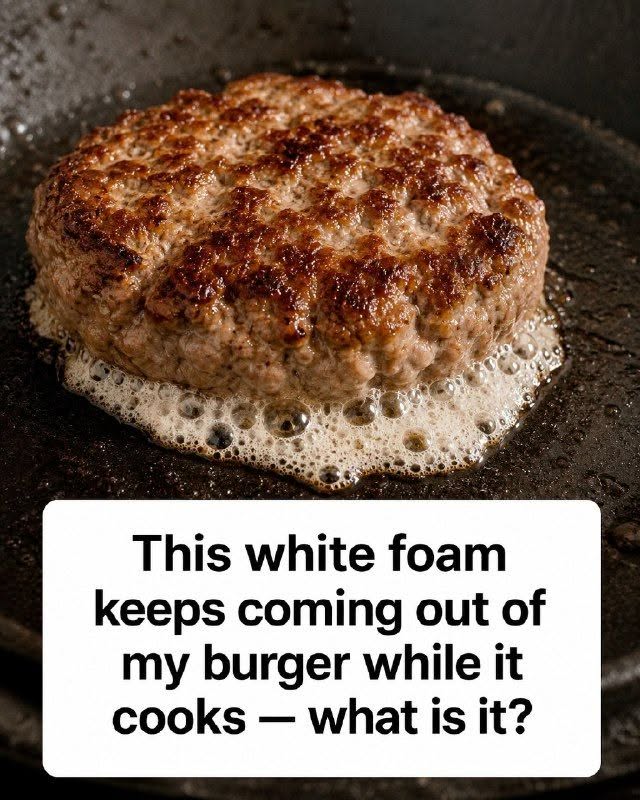
If you’ve ever cooked a burger and noticed a pale, foamy substance bubbling around the edges, you’re not alone. Many home cooks are surprised the first time they see it and wonder if the ground beef has gone bad.
The good news is that, in most cases, white foam on burgers is completely normal. It’s simply the result of natural proteins, moisture, and fat reacting to heat during cooking.
Understanding why it happens can help you cook better burgers with confidence.
ADVERTISEMENT
What Is the White Foam on Ground Beef?
The white foam that appears while cooking burgers is typically a combination of:
- Natural meat proteins
- Water released from the beef
- Rendered fat
- Tiny air bubbles created during cooking
As the burger heats up, proteins coagulate while moisture escapes from the meat. These proteins mix with water and melted fat, creating the light-colored foam you see on the surface of the pan.
This process is similar to the foam that forms when simmering homemade chicken or beef stock.
Is White Foam Safe to Eat?
Yes—in most cases, it is perfectly safe.
If your ground beef was:
- Properly refrigerated
- Cooked before its use-by date
- Free from unusual odors or discoloration
then the white foam is simply a natural byproduct of cooking.
It is not mold, soap, or harmful residue.
Why Does Ground Beef Foam More Than Steak?
Ground beef has much more exposed surface area than a whole steak.
When beef is ground:
- Muscle fibers are broken apart.
- More proteins are exposed.
- Moisture escapes more easily.
- Fat distributes throughout the meat.
Because of this, burgers release more juices during cooking, making the white foam much more noticeable than it would be on a steak.
Does Fat Content Affect the Foam?
Absolutely.
Ground beef with a higher fat percentage—such as 80/20—usually produces more juices while cooking.
As the fat renders, it combines with moisture and proteins, creating additional foam.
Here’s what you can generally expect:
| Ground Beef | Typical Cooking Result |
|---|---|
| 80/20 | Juicier burgers with more rendered fat and foam |
| 85/15 | Balanced moisture and browning |
| 90/10 or leaner | Less foam but a greater risk of drying out |
Higher-fat beef often delivers more flavor, even if it creates a little extra mess in the pan.
Fresh vs. Frozen Ground Beef
See more on the next page to continue reading →
ADVERTISEMENT