ADVERTISEMENT
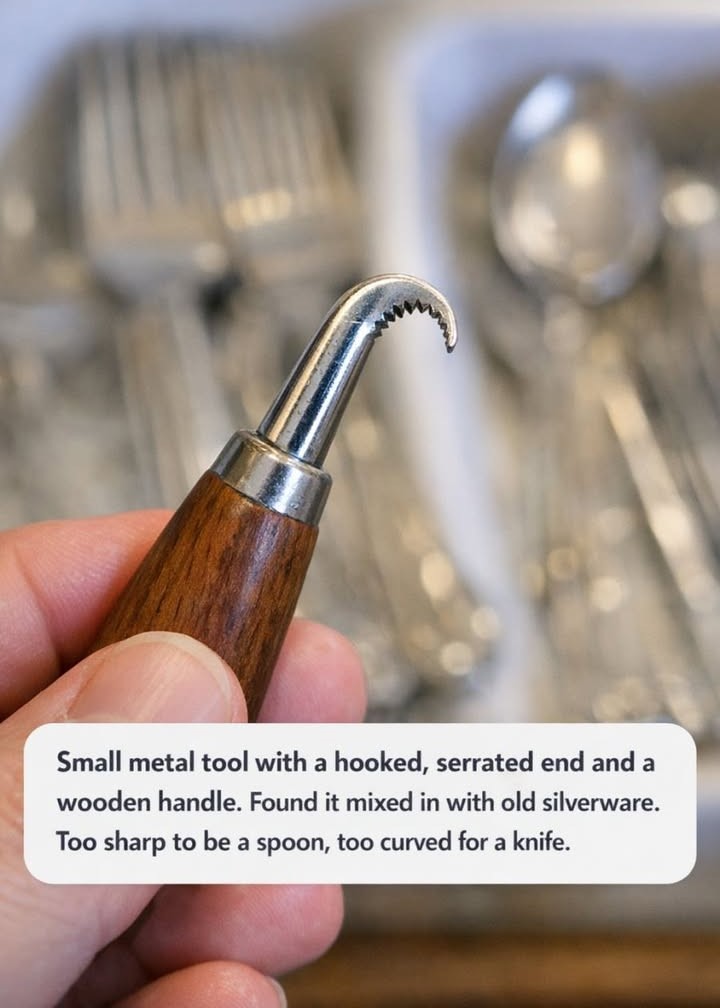
Vintage kitchen tools often spark curiosity, especially when their purpose isn’t immediately obvious. One such mystery is a small metal utensil featuring a hooked, serrated blade attached to a wooden handle. At first glance, it doesn’t resemble a spoon, knife, or fork, leaving many antique collectors wondering what it was designed to do.
The answer is both practical and surprisingly elegant: it’s a vintage butter curler, a charming kitchen tool once used to create decorative butter curls for formal dining tables.
A Kitchen Tool Designed for Elegance
Before refrigeration made whipped butter and spreadable tubs common, butter was typically served in solid blocks. During the late 1800s and early 1900s, presentation played an important role in entertaining guests, and even simple ingredients like butter received decorative treatment.
ADVERTISEMENT
The butter curler allowed hosts to transform an ordinary block of butter into delicate curls that looked beautiful on serving plates.
These decorative curls added sophistication to:
- Holiday dinners
- Afternoon teas
- Formal banquets
- Wedding receptions
- Family celebrations
The Distinctive Hooked, Serrated Blade
The butter curler is easy to recognize once you know what to look for.
Its unique features include:
- A small hooked metal blade
- Fine serrated teeth
- A gently curved profile
- A comfortable wooden handle
Unlike a knife, the blade isn’t designed for slicing. Instead, the serrated edge lightly scrapes the surface of chilled butter, producing thin ribbons that naturally curl as they’re lifted away.
The curved hook helps lift the butter curl without crushing its delicate shape.
Why It Isn’t a Spoon, Knife, or Fork
Many people mistake butter curlers for unusual eating utensils.
However, each design detail reveals its specialized purpose:
- No bowl for holding liquids like a spoon.
- No straight cutting edge like a knife.
- No tines like a fork.
- Small hooked blade optimized for shaving butter.
Its unusual shape makes perfect sense once you understand its decorative function.
Why Wooden Handles Were So Common
See more on the next page to continue reading →
ADVERTISEMENT