Why Are Crayfish Living in Your Yard?
ADVERTISEMENT
Burrowing crayfish prefer environments with moist, well-drained soil.
Your property may attract them if it has:
- Heavy clay soil
- Low-lying areas
- Good irrigation
- Nearby ponds, streams, or wetlands
- A naturally high water table
Their presence often indicates that the soil retains enough moisture to support underground life.
ADVERTISEMENT
How Can You Tell It’s a Crayfish Burrow?
Several features distinguish crayfish burrows from insect nests or mole activity.
Look for:
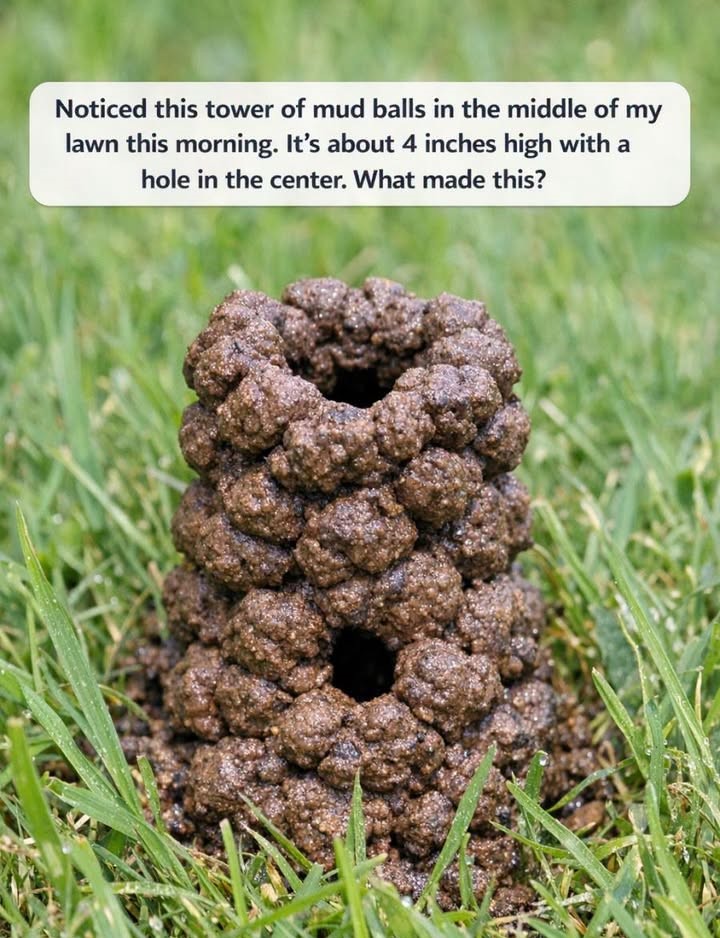
- A tall mud chimney
- Rounded mud pellets stacked vertically
- A single circular opening in the center
- Location in damp or poorly drained soil
Unlike ant hills, which consist of loose soil spread outward, crayfish chimneys are compact and tower-like.
What Happens Underground?
The visible mud chimney is only a small part of a much larger underground system.
Below the surface, crayfish create tunnels that may extend several feet into the soil.
These burrows often include:
- Living chambers
- Resting areas
- Moisture-retaining pockets
- Escape routes from predators
The tunnel remains humid year-round, allowing the crayfish to survive even during dry weather.
Are Crayfish Burrows Harmful?
For most homeowners, the answer is no.
In fact, crayfish provide several environmental benefits.
Potential Benefits
- Naturally aerate the soil
- Improve water infiltration
- Help recycle organic matter
- Support local biodiversity
However, large numbers of burrows can occasionally create uneven ground or make mowing more difficult.
In most residential lawns, isolated burrows cause very little damage.
How to Manage Crayfish Burrows Safely
If you’d rather not have mud chimneys in your yard, start with non-destructive methods.
Improve Drainage
Reducing excess soil moisture makes the area less attractive to burrowing crayfish.
Level the Chimney
Gently flattening the mud tower may discourage rebuilding, although some crayfish simply construct a new one.
Avoid Harmful Chemicals
Pesticides and other chemical treatments can damage beneficial wildlife and contaminate nearby water sources.
If the problem becomes widespread, consult a licensed wildlife professional before considering removal.
Can You Prevent Mud Towers?
Complete prevention isn’t always possible, especially in naturally wet areas.
However, these steps may reduce future activity:
- Correct drainage issues
- Avoid overwatering the lawn
- Fill persistent low spots
- Keep irrigation systems properly adjusted
Because crayfish are native wildlife in many regions, occasional burrows are considered normal.
Should You Be Concerned?
In most situations, there’s no reason for alarm.
Crayfish are generally harmless to people and pets, and their burrows rarely cause significant property damage.
Many homeowners choose to leave them alone, recognizing that these animals play an important role in maintaining healthy soil ecosystems.
When to Contact a Professional
Consider contacting a wildlife expert if:
- Dozens of burrows appear across your property.
- The ground becomes unsafe to walk or mow.
- Drainage problems become severe.
- You’re unsure whether the burrows belong to crayfish or another animal.
A professional can identify the source and recommend environmentally responsible management options.
Final Thoughts
Finding mysterious mud towers in your lawn may seem strange at first, but they’re usually a sign that burrowing crayfish have made themselves at home beneath the surface.
These remarkable creatures are skilled underground engineers, building mud chimneys that protect and ventilate their deep burrows. While the structures may look unusual, they rarely pose a serious problem and can even benefit your lawn by naturally improving soil aeration.
The next time you spot one of these miniature mud towers, you’ll know you’re witnessing one of nature’s most fascinating construction projects—right in your own backyard.
Frequently Asked Questions
What causes mud towers to appear in my lawn?
Most mud towers are built by burrowing crayfish that excavate underground tunnels and stack moist soil around the entrance.
Are mud chimneys dangerous?
No. They are generally harmless and are a natural feature of moist landscapes.
Will crayfish damage my yard?
A few burrows usually cause little or no damage. Large populations may create uneven areas but rarely harm healthy lawns.
Can I remove the mud towers?
Yes. You can gently level the chimney, but improving drainage is often a more effective long-term solution.
Do mud towers mean I have poor soil?
Not at all. They often indicate moist, healthy soil conditions that support a wide range of beneficial wildlife.
ADVERTISEMENT