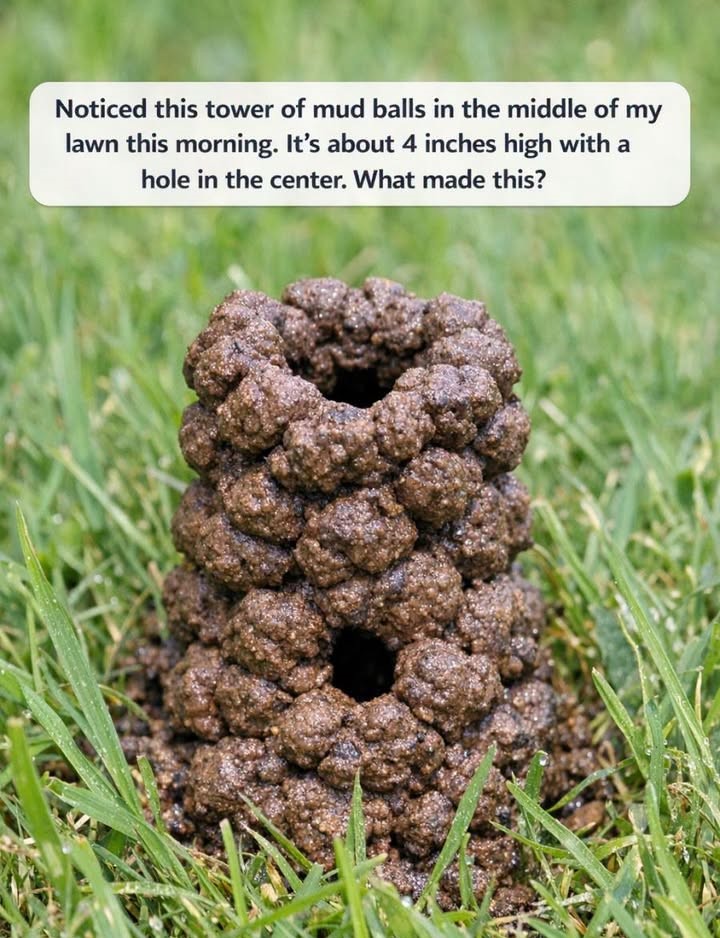
Why Are There Mud Towers in My Lawn?
ADVERTISEMENT
Walking across your yard and discovering a small tower of mud with a hole in the center can be surprising. These unusual structures often appear overnight, leaving many homeowners wondering if they’re looking at an insect nest, a mole tunnel, or something even more mysterious.
In most cases, these miniature mud chimneys are built by burrowing crayfish. While they may look unusual, they’re a natural part of many healthy ecosystems and are usually nothing to worry about.
Here’s everything you need to know about these fascinating underground builders.
ADVERTISEMENT
What Are Those Mud Towers?
Mud towers are chimney-shaped structures made from small balls of wet soil carefully stacked around the entrance of an underground burrow.
They typically measure:
- 3–6 inches (8–15 cm) tall
- About ½ inch (1–2 cm) wide at the opening
- Built from moist, compacted mud
These structures usually appear after periods of rain or in areas where the soil stays consistently moist.
Who Builds These Mud Chimneys?
The builders are typically burrowing crayfish, sometimes called terrestrial crayfish.
Unlike the crayfish that spend most of their lives underwater, these species are specially adapted to living in underground burrows where the soil remains damp throughout the year.
Most of their activity takes place at night, which is why homeowners often wake up to discover fresh mud towers that weren’t there the day before.
Why Do Crayfish Build Mud Towers?
These towers aren’t random piles of dirt—they serve several important purposes.
Ventilation
The chimney helps improve airflow inside the deep underground burrow.
Flood Protection
By raising the entrance above ground level, the tower helps reduce the amount of rainwater that flows directly into the tunnel.
Structural Stability
As crayfish remove soil while digging, they stack it neatly around the entrance instead of scattering it across the lawn.
These carefully engineered structures help maintain the ideal humidity and temperature inside the burrow.
Why Are Crayfish Living in Your Yard?
See more on the next page to continue reading →
ADVERTISEMENT