Step 1: Soak the Shears
ADVERTISEMENT
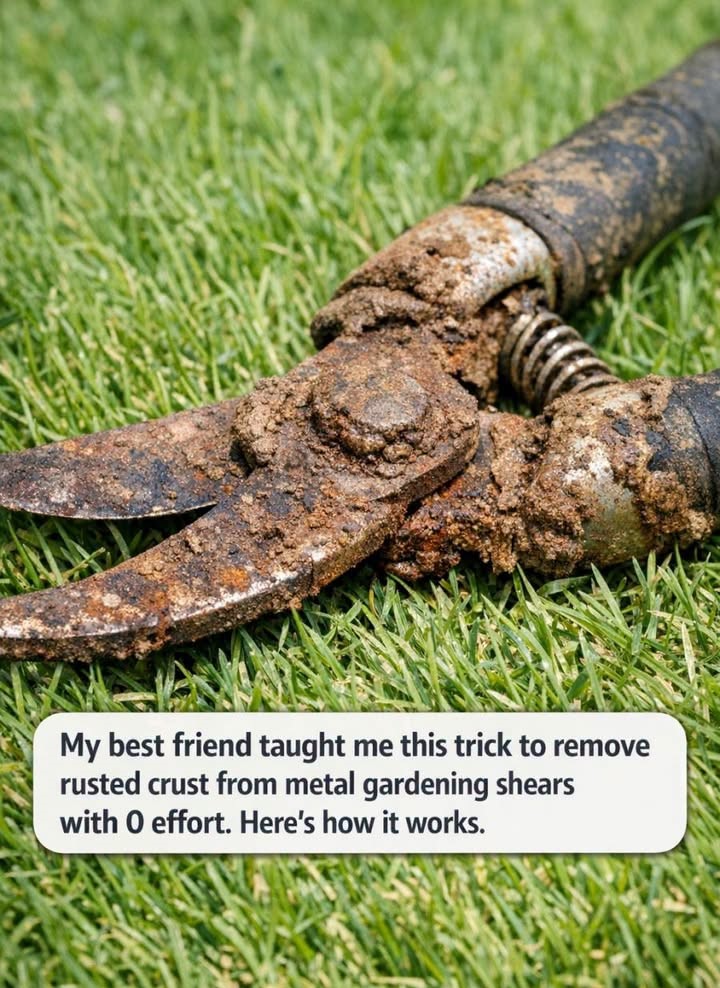
Fill a plastic container with enough white vinegar to completely submerge the rusty blades.
Place the gardening shears into the vinegar and allow them to soak.
Recommended soaking times:
ADVERTISEMENT
- Light rust: 2–4 hours
- Moderate rust: 4–6 hours
- Heavy rust: Overnight
The mild acetic acid in vinegar gradually loosens surface rust without requiring aggressive scrubbing.
Step 2: Remove the Rust
After soaking, remove the shears and rinse them with clean water.
If small patches of rust remain, sprinkle baking soda onto the blades and gently scrub with a soft sponge or brush. Baking soda provides mild abrasion that helps lift remaining residue without damaging the metal.
Avoid using steel wool or overly aggressive abrasive tools, as they may scratch the blade surface.
Step 3: Dry Thoroughly
Once clean, dry the shears immediately using a soft towel.
Moisture left on the metal can quickly cause new rust to develop, so take a few extra minutes to ensure every part is completely dry.
Step 4: Sharpen and Protect
If necessary, sharpen the cutting edge using a sharpening stone or file.
Finish by applying a thin coat of mineral oil or light machine oil to the blades and pivot point. This protective coating helps reduce moisture exposure and keeps the shears operating smoothly.
How to Prevent Rust in the Future
Keeping your gardening shears in excellent condition requires only a few simple habits:
- Wipe the blades clean after every use.
- Remove dirt, sap, and moisture before storage.
- Store tools in a cool, dry location.
- Apply a light coat of oil every few weeks during the gardening season.
- Inspect the blades regularly for early signs of rust.
These quick maintenance steps can significantly extend the life of your gardening tools.
Common Mistakes to Avoid
Many gardeners accidentally make rust removal more difficult by:
- Not soaking the tools long enough.
- Forgetting to dry them completely after cleaning.
- Storing damp tools in humid environments.
- Ignoring small rust spots until they become severe.
- Using harsh abrasives that may damage the blade finish.
Avoiding these mistakes helps preserve both the appearance and performance of your shears.
When You May Need a Different Solution
While vinegar works well for most surface rust, heavily corroded or deeply pitted tools may require a commercial rust remover or professional restoration. If the blades are severely damaged, bent, or no longer hold an edge after sharpening, replacing the shears may be the safest and most practical option.
Final Thoughts
Learning how to remove rust from gardening shears is an easy way to extend the life of your favorite gardening tools. Using white vinegar and baking soda offers a simple, budget-friendly solution that requires minimal effort while delivering excellent results. Combined with regular cleaning, proper storage, and occasional oiling, this method helps keep your shears clean, sharp, and ready for every gardening season.
ADVERTISEMENT