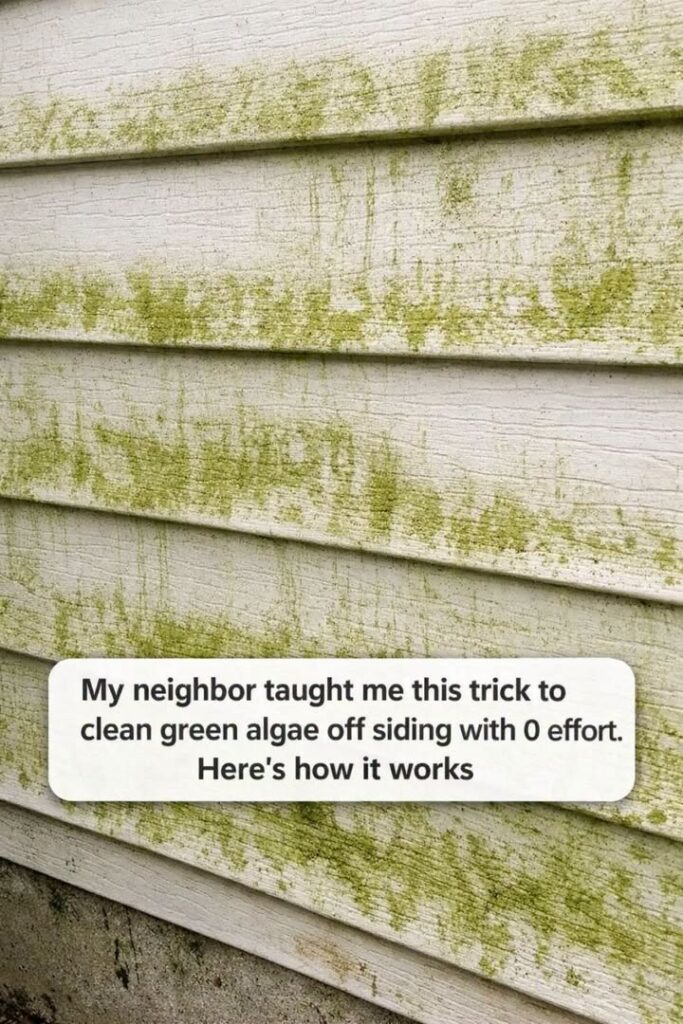
Let the Solution Do the Work
ADVERTISEMENT
After spraying, allow the solution to remain on the siding for 20 to 30 minutes.
During this time, the vinegar helps loosen algae from the surface, reducing the need for aggressive scrubbing.
Avoid allowing the solution to dry completely in direct sunlight.
ADVERTISEMENT
Rinse Thoroughly
After the waiting period:
- Rinse the siding with a garden hose.
- Begin at the top and work downward.
- Most light algae should rinse away easily.
For stubborn areas, repeat the process or gently scrub with a soft-bristle brush.
Avoid using high-pressure settings that could damage vinyl siding or force water behind the panels.
Protect Your Landscaping
Although vinegar is relatively mild, it’s still wise to protect nearby plants.
Before cleaning:
- Water surrounding plants thoroughly.
- Cover delicate flowers if necessary.
- Rinse nearby vegetation after cleaning.
Keep children and pets away until the area has been completely rinsed.
How Long Will the Results Last?
The length of time your siding stays clean depends on your environment.
In many climates, results may last:
- 6 to 12 months in moderate conditions
- Less time in heavily shaded or humid areas
Regular inspections allow you to treat small patches before they spread.
Prevent Algae from Returning
Reducing moisture around your home is the best long-term solution.
Helpful maintenance habits include:
- Trim overhanging tree branches.
- Prune shrubs away from the walls.
- Clean gutters regularly.
- Repair leaking downspouts.
- Improve airflow around your home.
- Wash siding annually using mild soap and water.
Even small improvements can significantly slow future algae growth.
When a Homemade Cleaner Isn’t Enough
Heavy staining or years of algae buildup may require stronger cleaning methods.
If the vinegar solution doesn’t remove the algae after multiple treatments, consider:
- A commercial exterior siding cleaner
- An oxygen-based outdoor cleaner
- Professional soft washing
Avoid aggressive pressure washing unless recommended by the siding manufacturer, as excessive pressure can crack vinyl, remove paint, or force water behind the siding.
Safety Tips
Before cleaning:
- Wear rubber gloves and eye protection.
- Avoid mixing vinegar with bleach or other household chemicals.
- Work on cool, overcast days whenever possible.
- Never spray electrical fixtures or outlets directly.
- Follow your siding manufacturer’s maintenance recommendations.
Frequently Asked Questions
Does vinegar damage vinyl siding?
When diluted properly and rinsed thoroughly, white vinegar is generally safe for vinyl siding. Always test a small area first, especially on painted surfaces.
Can I use a pressure washer?
Pressure washers can remove algae, but incorrect settings may damage siding or force water behind the panels. A garden hose is often the safer choice for routine cleaning.
How often should I clean my siding?
Most homes benefit from a thorough exterior cleaning once a year, with additional spot cleaning if algae begins to return.
Why does algae keep coming back?
Persistent shade, high humidity, poor drainage, and nearby vegetation create ideal conditions for algae growth. Reducing moisture and increasing sunlight can help prevent future buildup.
Final Thoughts
Green algae may be a common problem, but it doesn’t have to become a permanent one. With a simple homemade vinegar solution, regular maintenance, and a few preventive measures, you can keep your home’s siding looking cleaner throughout the year.
For stubborn stains or extensive growth, don’t hesitate to use a siding-specific cleaner or seek professional assistance to protect your home’s exterior while achieving the best results.
ADVERTISEMENT