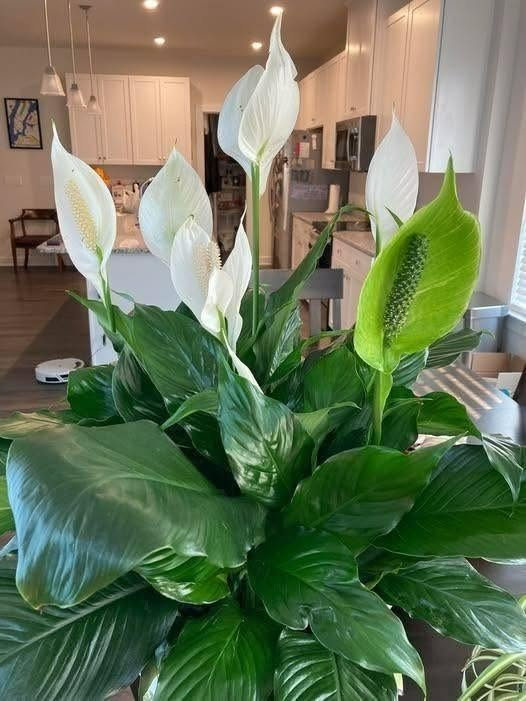
Expert Tip #1: Provide Bright Indirect Light
ADVERTISEMENT
The number one reason peace lilies fail to bloom is insufficient light.
Many people place peace lilies in dark corners because they’re known for tolerating low light. While they can survive there, survival is not the same as thriving.
For the best flowering results:
ADVERTISEMENT
- Place the plant near a bright east-facing window.
- Use filtered light near south- or west-facing windows.
- Avoid harsh direct afternoon sunlight.
- Rotate the pot regularly for even growth.
A healthy peace lily should receive enough indirect light to cast a soft shadow during the day.
Signs Your Plant Needs More Light
- No flowers for several years
- Slow growth
- Small leaves
- Dark green foliage with minimal new growth
Moving the plant to a brighter location often produces noticeable improvements within a few months.
Expert Tip #2: Maintain Consistent Moisture
Peace lilies prefer evenly moist soil but dislike standing water.
Allow the top inch of soil to dry slightly between waterings.
A useful characteristic of peace lilies is that they often communicate when they’re thirsty by gently drooping their leaves.
Best watering practices include:
- Water thoroughly when needed
- Empty excess water from saucers
- Use room-temperature water
- Avoid letting the soil remain soggy
Healthy roots are essential for flower production.
Expert Tip #3: Increase Humidity Levels
Because peace lilies evolved in tropical environments, they appreciate moderate to high humidity.
Dry indoor air can reduce growth and negatively impact blooming.
To increase humidity:
- Place a humidifier nearby
- Use a pebble tray with water
- Group tropical plants together
- Mist lightly when indoor air becomes very dry
Humidity levels between 50% and 70% are ideal.
Expert Tip #4: Feed Your Plant Properly
Flowering requires energy, and energy comes from nutrients.
Use a balanced liquid houseplant fertilizer every 6 to 8 weeks during the active growing season.
Look for fertilizers formulated for:
- Indoor plants
- Tropical foliage plants
- Flowering houseplants
Avoid excessive fertilization, which may lead to leaf growth at the expense of blooms.
Expert Tip #5: Keep Temperatures Stable
Peace lilies prefer temperatures between 65°F and 85°F (18°C to 29°C).
Avoid placing them near:
- Heating vents
- Air conditioners
- Drafty windows
- Frequently opened exterior doors
Stable temperatures help reduce plant stress and encourage flowering.
Expert Tip #6: Repot Only When Necessary
A slightly root-bound peace lily often blooms better than one placed in an oversized container.
Repot only when:
- Roots emerge from drainage holes
- Water drains too quickly
- Growth slows significantly
Choose a container only one size larger than the current pot.
Common Reasons Peace Lilies Stop Blooming
If your plant looks healthy but refuses to flower, consider these possibilities:
Insufficient Light
The most common cause of poor blooming.
Nutrient Deficiency
A lack of fertilizer can reduce flower production.
Excessive Pot Size
Large pots encourage root development instead of blooms.
Low Humidity
Dry indoor conditions can limit flowering.
Plant Immaturity
Young plants may require additional time before flowering regularly.
Frequently Asked Questions
How often should a peace lily bloom?
Healthy mature peace lilies commonly bloom once or twice per year, though ideal indoor conditions may encourage additional flowering cycles.
Can peace lilies bloom in low light?
They may survive in low light, but flowering is significantly more likely in bright indirect light.
Should I remove old flowers?
Yes. Removing faded blooms helps the plant direct energy toward new growth and future flowers.
What’s the best location for a peace lily?
A bright room with indirect sunlight, stable temperatures, and moderate humidity provides ideal growing conditions.
Final Thoughts
A blooming peace lily isn’t simply a matter of luck—it’s a sign that the plant’s environmental needs are being met.
By providing bright indirect light, consistent moisture, proper nutrition, and adequate humidity, you can create the conditions necessary for regular flowering and vigorous growth.
With patience and proper care, your peace lily can reward you with elegant white blooms that bring beauty and life to your home throughout the year.
ADVERTISEMENT