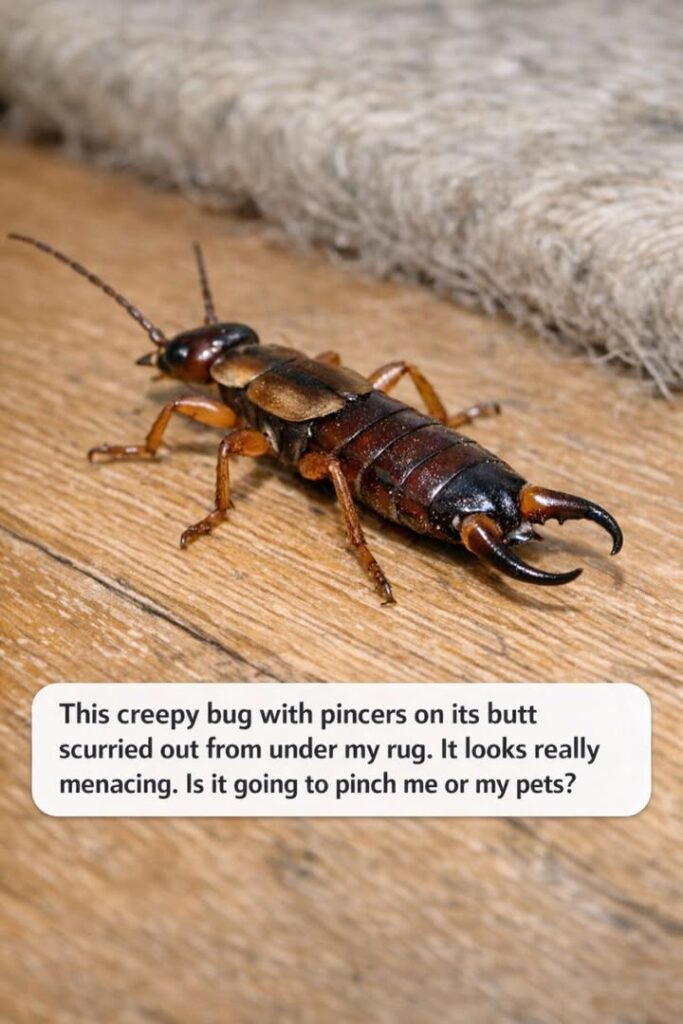
Can Earwigs Pinch You?
ADVERTISEMENT
Technically, yes.
An earwig may use its pincers if it feels trapped or threatened. However, the pinch is generally very mild and rarely causes discomfort.
Unlike some insects, earwigs:
ADVERTISEMENT
- Do not bite
- Do not sting
- Do not inject venom
- Do not break human skin under normal circumstances
Most earwigs prefer to run away rather than confront people.
Are Earwigs Dangerous to Dogs and Cats?
Pet owners are often concerned when they discover unfamiliar insects inside the home.
Fortunately, earwigs pose very little risk to pets.
The insects:
- Are not venomous
- Do not transmit known diseases to pets
- Cannot seriously injure dogs or cats
- Are unlikely to trigger toxic reactions
If a curious pet happens to eat an earwig, the worst outcome is usually mild digestive upset, if any reaction occurs at all.
Do Earwigs Spread Diseases?
One of the most common misconceptions about earwigs is that they carry harmful diseases.
In reality, earwigs are not known to spread diseases to humans or household pets.
Unlike certain pests that contaminate food or transmit pathogens, earwigs are considered nuisance insects rather than health threats.
Their presence may be unsettling, but it generally does not create health concerns inside the home.
The Truth Behind the “Earwig in Your Ear” Myth
The insect’s unusual name has contributed to one of history’s most persistent myths.
For centuries, people believed earwigs crawled into human ears while people slept and burrowed into the brain.
Thankfully, this story is completely false.
There is no scientific evidence that earwigs seek out human ears or pose any threat to the brain.
Like most insects, they avoid humans whenever possible.
How to Identify an Earwig
Earwigs can be recognized by several unique characteristics:
Key Features
- Long, narrow body
- Dark brown or reddish coloration
- Prominent rear pincers
- Long segmented antennae
- Six legs
- Quick, scurrying movement
Unlike silverfish, cockroaches, or beetles, earwigs have highly visible pincers at the end of their abdomen.
Why Earwigs Enter Homes
Earwigs typically wander indoors while searching for:
- Moisture
- Shelter
- Food sources
- Protection from extreme weather
They are particularly attracted to:
- Damp basements
- Bathrooms
- Laundry rooms
- Kitchens
- Crawl spaces
Heavy rainfall, excessive outdoor moisture, and seasonal weather changes often increase indoor earwig sightings.
How to Get Rid of Earwigs Naturally
Most minor earwig problems can be managed without professional pest control.
Reduce Moisture
Earwigs thrive in damp environments.
Consider:
- Fixing plumbing leaks
- Running dehumidifiers
- Improving ventilation
- Drying damp areas
Vacuum Regularly
Vacuuming helps remove:
- Earwigs
- Food sources
- Hiding debris
Pay special attention to:
- Baseboards
- Rugs
- Furniture edges
- Closets
Use Simple Traps
Homemade traps can be surprisingly effective.
Examples include:
- Rolled newspaper traps
- Shallow containers with soapy water
- Damp cardboard traps
Dispose of captured insects outdoors.
Pet-Safe Ways to Prevent Earwigs
If you have pets, focus on non-toxic prevention methods.
Seal Entry Points
Inspect and seal:
- Window gaps
- Door thresholds
- Foundation cracks
- Utility line openings
Manage Outdoor Moisture
Keep mulch, leaves, and vegetation away from your home’s foundation.
Use Diatomaceous Earth
Food-grade diatomaceous earth can be applied around entry points as a natural barrier.
When used correctly, it is generally considered safer than many chemical insecticides.
When Should You Call a Pest Control Professional?
Most earwig encounters do not require professional treatment.
However, consider contacting a pest control specialist if:
- Earwigs appear in large numbers regularly
- DIY methods fail
- Moisture issues are severe
- Outdoor populations are damaging plants and gardens
A professional inspection can identify hidden causes and provide long-term solutions.
Final Thoughts
Finding an earwig under your rug may be surprising, but it’s rarely a reason for concern. Despite their intimidating pincers and unsettling appearance, earwigs are largely harmless insects that prefer hiding in damp, dark places rather than interacting with people or pets.
By reducing moisture, sealing entry points, and maintaining a clean environment, you can greatly reduce the chances of future earwig encounters. In most cases, these unusual-looking insects are more of a nuisance than a threat, making them one of the less worrisome pests you can find inside your home.
ADVERTISEMENT