Humane Ways to Encourage Wildlife to Move On
ADVERTISEMENT
Many homeowners prefer solutions that allow wildlife to leave safely.
Options include:
ADVERTISEMENT
- Motion-activated sprinklers
- Commercial animal repellents
- Predator scent products
- Reducing nearby food sources
- Eliminating hiding places around the yard
Making the area less comfortable often encourages animals to seek a more suitable location.
Live Trapping: Know the Rules First
If the animal refuses to leave, live trapping may be an option.
Before trapping:
- Check local wildlife regulations.
- Some areas require permits.
- Certain animals may be protected.
- Relocation rules vary by region.
Always use appropriately sized humane traps and check them frequently to minimize stress on the animal.
Seal the Tunnel Only After It’s Empty
Never block an occupied burrow.
Once you’re confident the tunnel has been abandoned:
- Fill the tunnels with gravel or compacted soil.
- Reinforce the area with crushed stone if necessary.
- Cover the entrance with heavy-duty galvanized hardware cloth.
- Extend the mesh at least 12 inches below ground and bend it outward to discourage future digging.
Proper sealing helps prevent new animals from moving in.
Install a Permanent Dig-Proof Barrier
For long-term protection, consider installing an underground barrier around your shed.
A durable barrier should include:
- Galvanized hardware cloth or welded wire mesh
- Burial depth of at least 12 inches
- An outward-facing horizontal section underground
- Secure attachment around the entire perimeter
This creates an effective obstacle for most burrowing wildlife.
Repair Any Foundation Damage Promptly
If burrowing has already affected the slab, repairs may include:
- Filling small cracks with concrete repair compound
- Replacing eroded soil beneath the slab
- Reinforcing weakened sections
- Consulting a foundation specialist if significant settling has occurred
Early repairs help prevent more extensive structural issues in the future.
Make Your Yard Less Attractive to Burrowing Animals
Simple landscaping changes can reduce the likelihood of future visitors.
Helpful strategies include:
- Keeping vegetation trimmed
- Removing wood piles and debris
- Harvesting fallen fruit promptly
- Protecting vegetable gardens with fencing
- Limiting easy food sources around the property
A well-maintained yard is generally less appealing to burrowing wildlife.
When It’s Time to Call a Professional
Professional assistance may be the best choice if:
- The tunnel continues expanding.
- Multiple burrows appear.
- You suspect significant foundation damage.
- Local wildlife laws restrict removal.
- You cannot safely identify the animal.
Wildlife removal specialists and structural professionals can help resolve the problem safely while protecting both your property and local wildlife.
Frequently Asked Questions
Will filling the hole solve the problem?
Not if the animal is still inside. It may simply dig another exit or create additional tunnels.
Are groundhog tunnels dangerous?
They can become a concern if they undermine foundations, sidewalks, patios, or retaining walls over time.
Can I prevent future burrows?
Yes. Underground barriers, regular yard maintenance, and removing food sources are among the most effective preventive measures.
Should I worry immediately?
Not necessarily. One tunnel doesn’t automatically mean severe damage, but inspecting the area and taking action early is the best way to avoid larger problems.
Final Thoughts
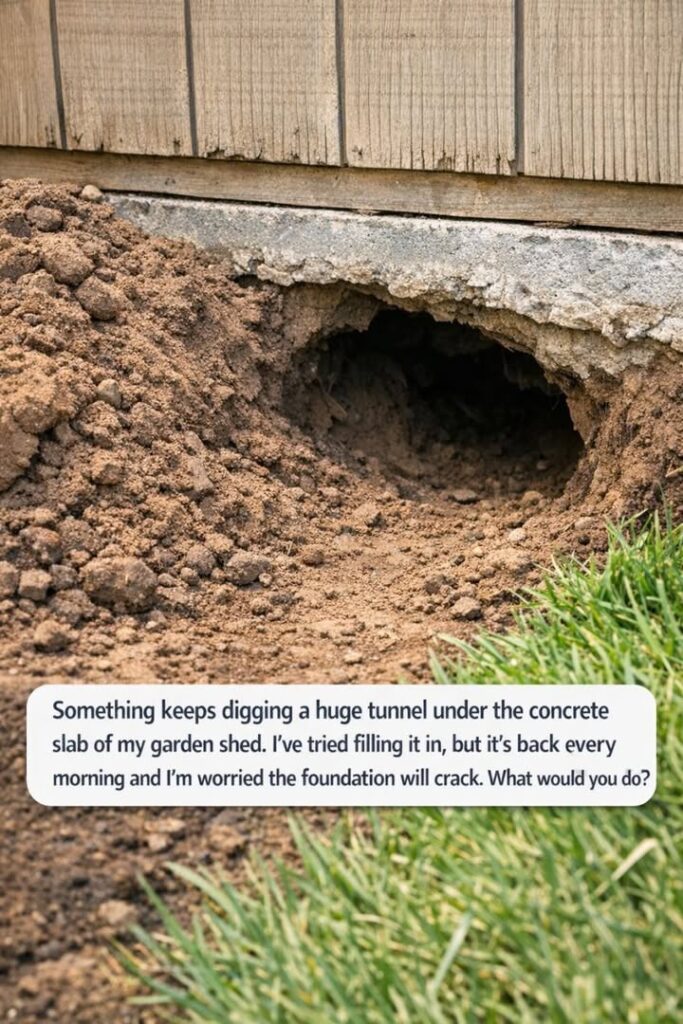
Discovering a tunnel beneath your garden shed can be unsettling, but it doesn’t always signal a major structural problem. In many cases, a burrowing animal has simply found a sheltered place to nest. By identifying the cause, monitoring your foundation, using humane deterrents, and installing long-term protection, you can safeguard your shed while encouraging wildlife to relocate naturally.
A prompt response today can help prevent costly repairs and keep both your property and the surrounding environment in good condition.