Step-by-Step Instructions
Step 1: Build the Flavor Base
ADVERTISEMENT
In a large Dutch oven or heavy-bottomed soup pot, heat the butter and olive oil over medium heat.
Add:
- Onion
- Celery
- Carrots
Cook for 6–8 minutes until softened and fragrant.
ADVERTISEMENT
Add the garlic and cook for an additional minute.
This slow sautéing process creates the rich, savory foundation that makes homemade chowder so flavorful.
Step 2: Add Potatoes and Broth
Add the cubed potatoes to the pot.
Pour in the seafood stock or broth and stir in:
- Salt
- Black pepper
- Smoked paprika
- Thyme
- Bay leaf
Bring the mixture to a gentle simmer.
Reduce the heat slightly and cook for 15–20 minutes, or until the potatoes are fork-tender.
Step 3: Add Milk and Cream
Once the potatoes are soft, pour in the milk and heavy cream.
Stir gently and allow the chowder to heat through without boiling.
Boiling dairy can affect the texture, so maintain a gentle simmer.
Step 4: Cook the Seafood
Add the shrimp, fish, scallops, and shellfish.
Cook for approximately 5–7 minutes.
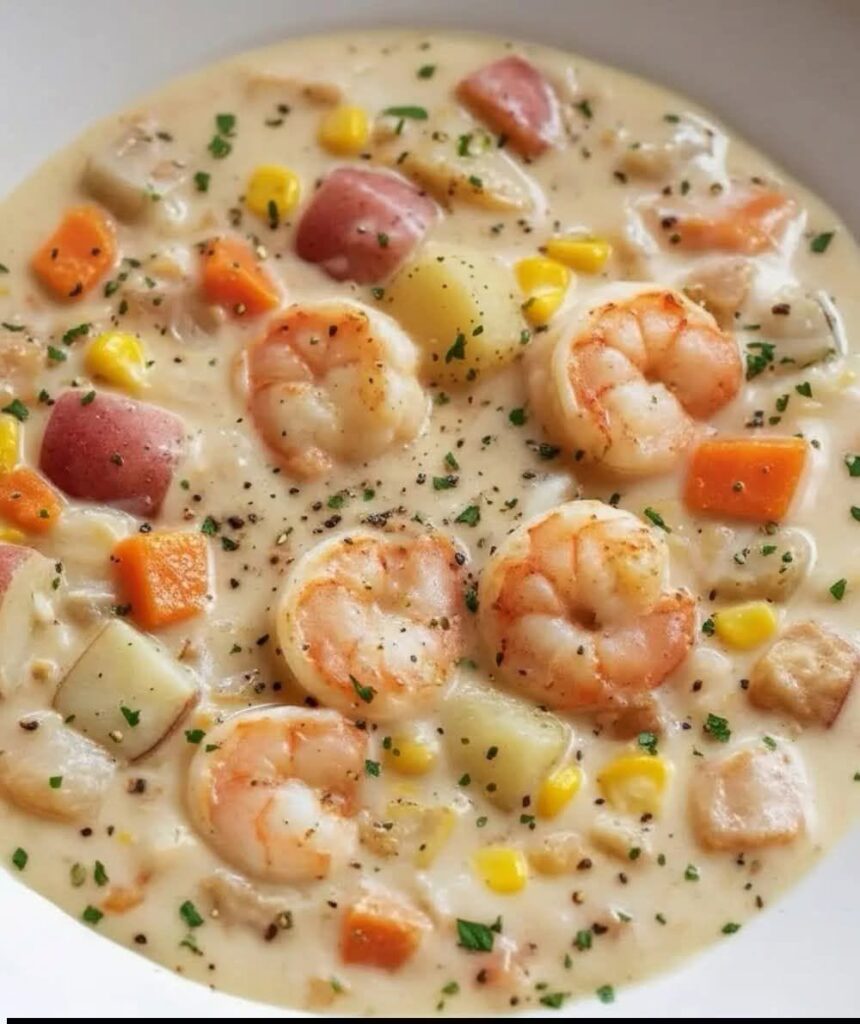
The seafood is done when:
- Shrimp turn pink and opaque
- Fish flakes easily
- Scallops become firm
- Clams and mussels open
Discard any shellfish that remain closed after cooking.
Step 5: Finish the Chowder
Remove the bay leaf.
Taste and adjust seasoning if needed.
For a thicker chowder, lightly mash a few potato pieces directly into the broth.
This simple technique creates a naturally creamy texture.
Step 6: Serve and Garnish
Ladle the chowder into bowls and top with:
- Fresh parsley
- Chopped chives
- Cracked black pepper
Serve immediately with warm bread or oyster crackers.
Best Seafood for Chowder
One of the best things about seafood chowder is its flexibility.
Popular seafood choices include:
- Shrimp
- Cod
- Haddock
- Scallops
- Clams
- Mussels
- Crab
- Lobster
- Salmon
Using a variety of seafood creates deeper flavor and a more luxurious texture.
Storage and Reheating Tips
Refrigeration
Store leftovers in an airtight container for up to 3 days.
Reheating
Warm slowly over low heat, stirring occasionally.
Avoid boiling to prevent the seafood from becoming overcooked.
Freezing
Cream-based soups can separate after freezing, so refrigeration is generally recommended for best quality.
Final Thoughts
This Creamy Seafood Chowder combines tender seafood, hearty vegetables, and a rich homemade broth into one unforgettable meal. It’s comforting enough for a chilly evening yet elegant enough for special occasions.
With simple ingredients and easy preparation, this restaurant-quality chowder proves that exceptional seafood dishes can be made right at home.
ADVERTISEMENT