Is Dog Vomit Slime Mold Dangerous?
ADVERTISEMENT
The good news is that dog vomit slime mold is considered harmless in most home gardens.
It does not:
- Damage healthy plants
- Infect flowers or vegetables
- Poison the soil
- Release harmful toxins
- Spread disease to people
Most pets and wildlife ignore it because of its texture and lack of appeal.
ADVERTISEMENT
While it’s generally best to discourage children from touching unknown organisms in the garden, dog vomit slime mold itself is not considered dangerous.
The Science Behind This Strange Organism
Unlike fungi, slime molds spend much of their life as a single giant cell containing millions of nuclei.
During its active stage, the organism slowly creeps across organic material while feeding on:
- Bacteria
- Fungi
- Microscopic organisms
- Decaying plant material
As conditions become less favorable, it produces millions of tiny spores that are carried away by wind or rain, allowing the life cycle to begin again elsewhere.
This remarkable behavior has made slime molds a fascinating subject for biological research.
Why Mulch Encourages Slime Mold Growth
Wood mulch creates nearly perfect conditions for slime mold.
It provides:
- Constant moisture
- Organic food sources
- Shade
- Warm temperatures
- Limited air movement
Fresh hardwood mulch is especially attractive because it retains moisture while slowly decomposing.
Gardens with frequent irrigation or poor drainage are even more likely to experience slime mold growth.
How to Remove Dog Vomit Slime Mold
Although slime mold is harmless, many homeowners prefer to remove it for cosmetic reasons.
Simple removal methods include:
- Scooping it up with a shovel
- Breaking it apart with a rake
- Turning the mulch to expose it to sunlight
- Allowing the area to dry naturally
Because slime mold is not deeply rooted, removal is usually quick and easy.
Keep in mind that disturbing mature slime mold may release spores into the air, so wearing gloves and avoiding excessive handling is recommended.
When It’s Best to Leave It Alone
In many cases, doing nothing is actually the best solution.
Dog vomit slime mold often disappears on its own within several days as the weather becomes drier.
Leaving it undisturbed offers several environmental benefits:
- Supports natural decomposition
- Returns nutrients to the soil
- Encourages healthy microbial activity
- Promotes a balanced garden ecosystem
Since it doesn’t harm plants, many gardeners simply allow nature to take its course.
Do Fungicides Work?
Many people assume fungicides will eliminate slime mold.
However, because slime molds are not fungi, fungicides are generally ineffective.
Instead, focus on reducing the environmental conditions that favor growth:
- Water less frequently.
- Improve drainage.
- Increase sunlight where possible.
- Rake or fluff mulch regularly to improve airflow.
These simple practices are far more effective than chemical treatments.
How to Prevent Future Slime Mold
While it isn’t always possible to prevent slime mold completely, several maintenance practices can reduce future outbreaks.
Helpful prevention tips include:
- Avoid overwatering garden beds.
- Keep mulch layers around 2 to 3 inches thick.
- Improve air circulation around plants.
- Replace overly compacted mulch.
- Choose mulch that dries more quickly if slime mold becomes a recurring issue.
- Improve drainage in low-lying areas.
Regular garden maintenance makes conditions much less favorable for slime mold growth.
When Should You Be Concerned?
Dog vomit slime mold itself rarely requires professional attention.
However, consider consulting a gardening expert if:
- The growth repeatedly returns despite environmental improvements.
- You cannot confidently identify the organism.
- Nearby plants begin showing signs of disease.
- Other unusual fungal or bacterial growth appears throughout the garden.
A local gardening extension service or landscape professional can help determine whether another issue is affecting your landscape.
Final Thoughts
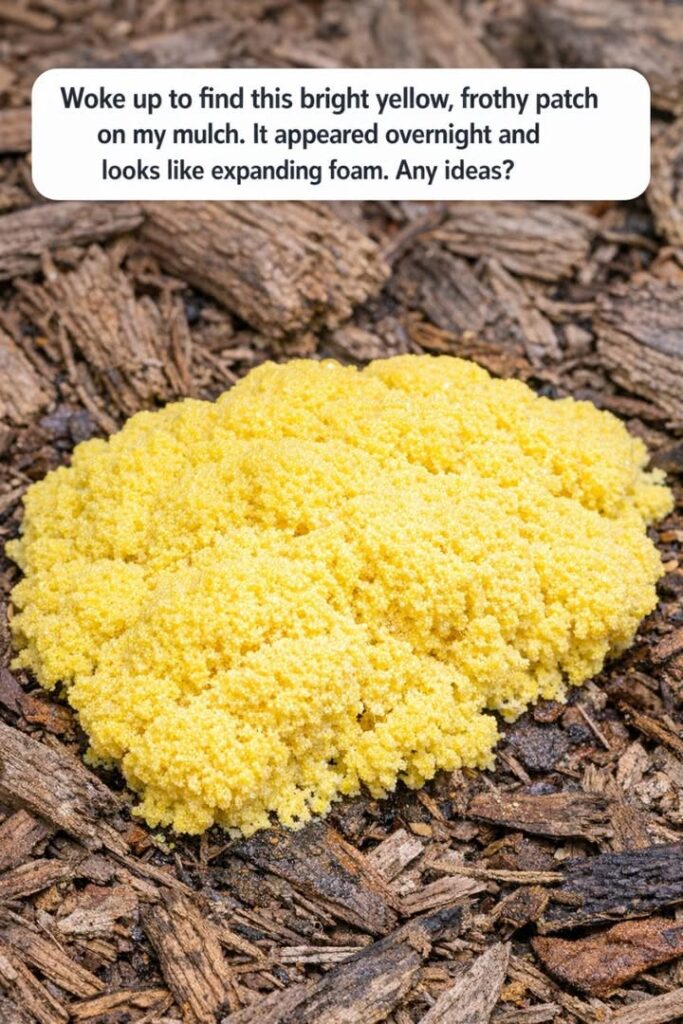
Finding a bright yellow foamy patch on your mulch can certainly be surprising, but in most cases it’s simply dog vomit slime mold—a harmless organism that helps break down organic matter and recycle nutrients in your garden.
Although its appearance may seem alarming, it poses little risk to people, pets, or healthy plants. If it bothers you, simple removal and improved garden maintenance are usually enough to control it. Otherwise, you can safely leave it alone and let nature complete its work.
Understanding this unusual garden visitor can save you unnecessary worry while helping you maintain a healthy, thriving landscape.
ADVERTISEMENT