ADVERTISEMENT
Have you seen tiny white larvae emerge from berries after a saltwater soak? Learn what they are, why they appear, and whether your berries are still safe to eat.
The Viral Berry Cleaning Trend That Surprised Millions
Berries are among the most popular fruits in the world. From sweet strawberries and juicy blueberries to tart raspberries, they’re packed with flavor and nutrients that make them a favorite addition to breakfasts, desserts, and healthy snacks.
Recently, however, a viral social media trend has left many berry lovers shocked.
ADVERTISEMENT
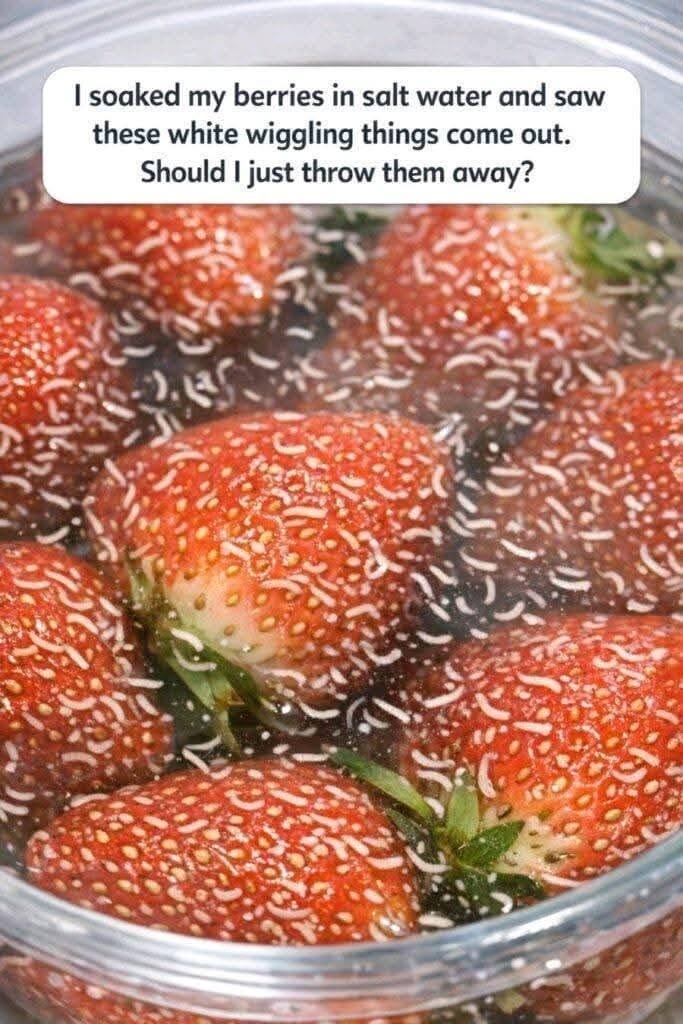
The trend involves soaking fresh berries in salt water. After several minutes, some people notice tiny white, worm-like larvae emerging from the fruit.
For many, the sight is unsettling.
Questions quickly follow:
- What are these tiny creatures?
- Are the berries contaminated?
- Is the fruit still safe to eat?
- Should you throw the berries away?
The answer may be less alarming than you think.
What Are the Tiny White Larvae Found in Berries?
The small white organisms occasionally seen after a saltwater soak are typically larvae of the Spotted Wing Drosophila (SWD), a species of fruit fly.
Unlike common fruit flies that prefer overripe fruit, SWD females can lay eggs inside healthy ripening berries while they are still growing.
Once the eggs hatch, the larvae develop inside the fruit where they remain largely invisible to consumers.
These larvae are commonly found in:
- Strawberries
- Blueberries
- Raspberries
- Blackberries
- Cherries
Because they are very small, most people never notice them until the fruit is soaked.
Why Does Salt Water Make Them Appear?
The viral saltwater test works because of a natural process involving changes in moisture and salt concentration.
When berries are submerged in salt water:
- The larvae become stressed by the environment.
- They begin moving more actively.
- Some emerge from the fruit and float into the water.
A common soaking solution uses:
- 1 tablespoon salt
- 1 cup water
The berries are typically soaked for 15–30 minutes before being rinsed.
While this method can reveal hidden larvae, it doesn’t necessarily indicate that the fruit is unsafe.
Meet the Spotted Wing Drosophila
The Spotted Wing Drosophila is a small fruit fly that has become a challenge for berry growers worldwide.
Unlike traditional fruit flies that target damaged fruit, SWD can:
- Pierce healthy fruit skin
- Lay eggs inside ripening berries
- Reproduce rapidly during growing seasons
Because of their unique behavior, even carefully grown fruit can occasionally contain larvae.
This can happen in:
- Organic produce
- Conventional produce
- Home-grown berries
- Farmers market fruit
The presence of larvae does not automatically indicate poor farming practices.
Are These Larvae Dangerous to Eat?
For most healthy individuals, accidentally consuming small fruit fly larvae is not considered a significant health risk.
Food safety experts generally agree that:
- The larvae are not known to transmit diseases to humans.
- Small amounts may be consumed unknowingly without causing harm.
- The primary concern is usually the unpleasant appearance rather than a serious safety issue.
That said, many people understandably prefer not to eat fruit containing visible larvae.
What Food Safety Experts Say
Food safety authorities acknowledge that completely eliminating insects from agricultural products is nearly impossible.
Fresh fruits and vegetables naturally grow outdoors where insects are part of the environment.
Experts recommend:
- Washing produce thoroughly
- Inspecting berries before eating
- Discarding spoiled fruit
- Following proper storage practices
These steps help reduce both insects and surface contaminants.
When You Should Throw Berries Away
See more on the next page to continue reading →
ADVERTISEMENT