ADVERTISEMENT
Wondering why your peace lily won’t bloom? Learn the proven care tips that encourage more flowers, healthier leaves, and year-round growth from one of the most popular indoor plants.
How to Get Your Peace Lily to Bloom: The Secret Behind Those Beautiful White Flowers
There’s something incredibly satisfying about seeing a peace lily bloom for the very first time.
One day it’s simply a beautiful green houseplant, filling a corner of your home with lush foliage. Then, almost magically, a graceful white bloom rises above the leaves, transforming the entire plant into a living work of art.
ADVERTISEMENT
For many plant owners, that first flower feels like a reward for months of care and patience.
I still remember noticing a small pale-green shoot emerging from the center of my peace lily. At first, I assumed it was another leaf. But over the following days, it slowly stretched upward and began to unfurl. Soon, a stunning white spathe appeared, revealing the flower spike within.
That single bloom completely changed how I viewed the plant.
Yet many peace lily owners never experience that moment. Their plants remain healthy, green, and growing—but never flower.
The good news is that most peace lilies are fully capable of blooming indoors. If yours isn’t producing flowers, it’s usually because one or more essential growing conditions are missing.
Let’s explore exactly what triggers blooming and how you can encourage your peace lily to flower more consistently.
Understanding How Peace Lilies Bloom
Peace Lily is a tropical plant native to the rainforests of Central and South America.
In its natural habitat, it grows beneath the forest canopy where it receives:
- Filtered sunlight
- Consistent moisture
- Warm temperatures
- High humidity
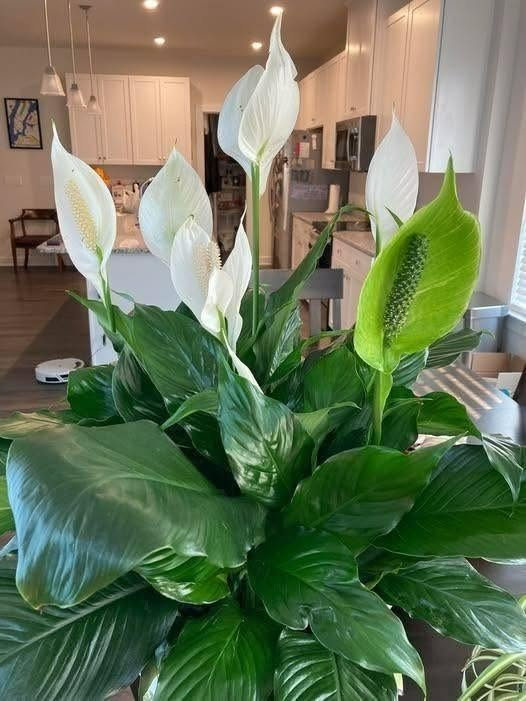
Interestingly, the white structure most people call a flower is actually a specialized leaf known as a spathe. The tiny flowers are located on the central spike, called the spadix.
When environmental conditions are favorable, the plant directs energy toward reproduction and produces blooms.
When conditions are less than ideal, the plant focuses solely on survival and foliage growth.
Expert Tip #1: Provide Bright Indirect Light
See more on the next page to continue reading →
ADVERTISEMENT
ADVERTISEMENT