4. Poor Bathroom Ventilation
ADVERTISEMENT
Proper ventilation is one of the most important factors in preventing moisture-related issues.
If your bathroom exhaust fan is:
- Dirty
- Weak
- Rarely used
- Not venting outdoors
Humidity remains trapped inside the room, allowing residue to accumulate much more quickly.
ADVERTISEMENT
Other signs of poor ventilation include:
- Mirrors that stay foggy long after showering
- Peeling paint
- Damp odors
- Persistent condensation
5. Aging or Moisture-Damaged Paint
Paint designed for dry interior rooms may not perform well in humid environments.
Over time, constant exposure to moisture can cause certain paint components to discolor or separate, creating yellow stains that appear to seep through the surface.
Using high-quality bathroom paint helps reduce this problem.
6. Cleaning Product Buildup
Ironically, frequent cleaning can sometimes contribute to residue if products are not completely removed.
Repeated use of:
- Aerosol disinfectants
- Bathroom sprays
- Strong chemical cleaners
may leave behind invisible films that react with moisture and gradually become yellow or sticky.
Regular rinsing after cleaning can help minimize buildup.
7. Hidden Moisture or Minor Leaks
Although less common, persistent yellow stains in one specific location could indicate excess moisture from behind the wall.
Consider further inspection if you notice:
- Bubbling paint
- Soft drywall
- Musty odors
- Stains that continue to spread even when the bathroom is not in use
In these situations, identifying the moisture source early can help prevent more extensive damage.
Are Yellow Bathroom Stains Mold?
Not usually.
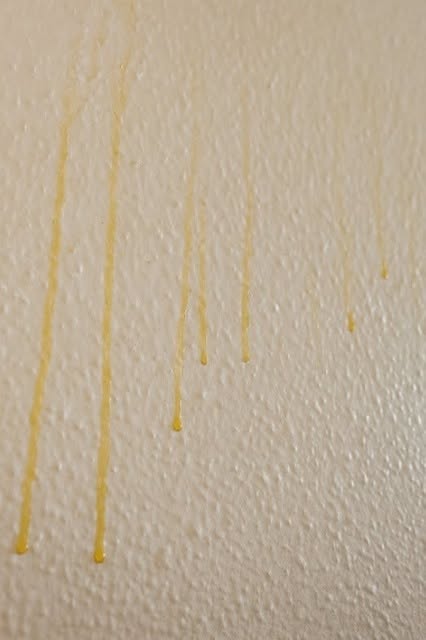
Yellow streaks are often caused by residue rather than mold.
Mold typically appears as:
- Black
- Green
- Gray
- Spotty or fuzzy patches
rather than smooth streaks running down the wall.
However, excess moisture can eventually encourage mold growth if humidity problems are left unresolved.
How to Clean Yellow Bathroom Wall Residue
Before cleaning, determine the likely source of the stains.
Mild Soap Solution
For everyday residue:
- Warm water
- Mild dish soap
- Soft microfiber cloth
Gently wipe the affected area and dry thoroughly.
White Vinegar Solution
A mixture of equal parts white vinegar and water may help remove oily residue caused by smoke or soap buildup.
Apply with a soft cloth, wipe gently, then rinse with clean water.
Baking Soda Paste
For stubborn stains:
- Mix baking soda with a small amount of water
- Apply the paste to the stain
- Gently scrub using a soft sponge
- Rinse and dry completely
Avoid abrasive scrubbing tools that could damage painted surfaces.
Tips to Prevent Yellow Wall Stains
Keeping your bathroom dry and well ventilated is the best long-term solution.
Helpful maintenance habits include:
- Run the exhaust fan during every shower.
- Leave the fan running for at least 20 minutes afterward.
- Open a window when weather permits.
- Wipe condensation from walls regularly.
- Clean bathroom walls every few weeks.
- Use moisture-resistant, mildew-resistant paint during renovations.
When Should You Call a Professional?
Consider contacting a qualified home repair specialist if:
- Stains return shortly after cleaning.
- Paint begins peeling or bubbling.
- You notice a persistent musty smell.
- You suspect a plumbing leak or hidden moisture inside the wall.
Addressing moisture problems early can help prevent more expensive repairs later.
Final Thoughts
Yellow streaks on bathroom walls can certainly catch your attention, but they’re often the result of normal household conditions such as condensation, soap residue, poor ventilation, or older paint.
Regular cleaning, improved airflow, and routine maintenance are usually enough to keep bathroom walls looking clean and fresh.
If the stains continue to reappear despite proper care, it’s worth investigating further to rule out hidden moisture or plumbing issues.
With a little attention and preventative maintenance, your bathroom can remain clean, comfortable, and free from unwanted wall residue.
Quick Summary
Yellow stains on bathroom walls are most commonly caused by:
- Smoke or nicotine residue
- Condensation mixed with dust
- Soap and personal care product buildup
- Poor bathroom ventilation
- Aging paint
- Cleaning product residue
- Hidden moisture or minor leaks (less common)
Most cases are easy to manage with proper cleaning and improved ventilation, helping you protect both your walls and your home’s indoor environment.
ADVERTISEMENT