Why Were Cutting Forks So Popular?
ADVERTISEMENT
Before modern flatware became standardized, manufacturers often introduced multipurpose utensils designed to simplify everyday meals.
The cutting fork offered several advantages:
- Reduced the number of utensils needed.
- Made casual dining more convenient.
- Allowed easier one-handed eating.
- Saved space during travel and picnics.
- Added versatility to household silverware sets.
Many families appreciated the convenience, especially for quick lunches or informal dinners.
ADVERTISEMENT
Are Cutting Forks Still Made Today?
Yes. While they aren’t as common as standard dinner forks, cutting forks continue to be available from several flatware manufacturers.
They remain popular among:
- People who enjoy vintage silverware
- Collectors of classic kitchen utensils
- Outdoor dining enthusiasts
- Travelers and campers
- Individuals who prefer multifunctional utensils
Many modern designs feature stainless steel construction and contemporary styling while preserving the original functional design.
Is the Short Prong Actually Sharp?
Most cutting forks are not razor-sharp like kitchen knives.
Instead, the wide tine features a lightly serrated or beveled edge that provides enough cutting ability for softer foods without creating the safety concerns of a sharp blade.
This makes the utensil practical for everyday use while remaining comfortable to handle.
How to Identify a Cutting Fork
If you’re unsure whether you own one, look for these characteristics:
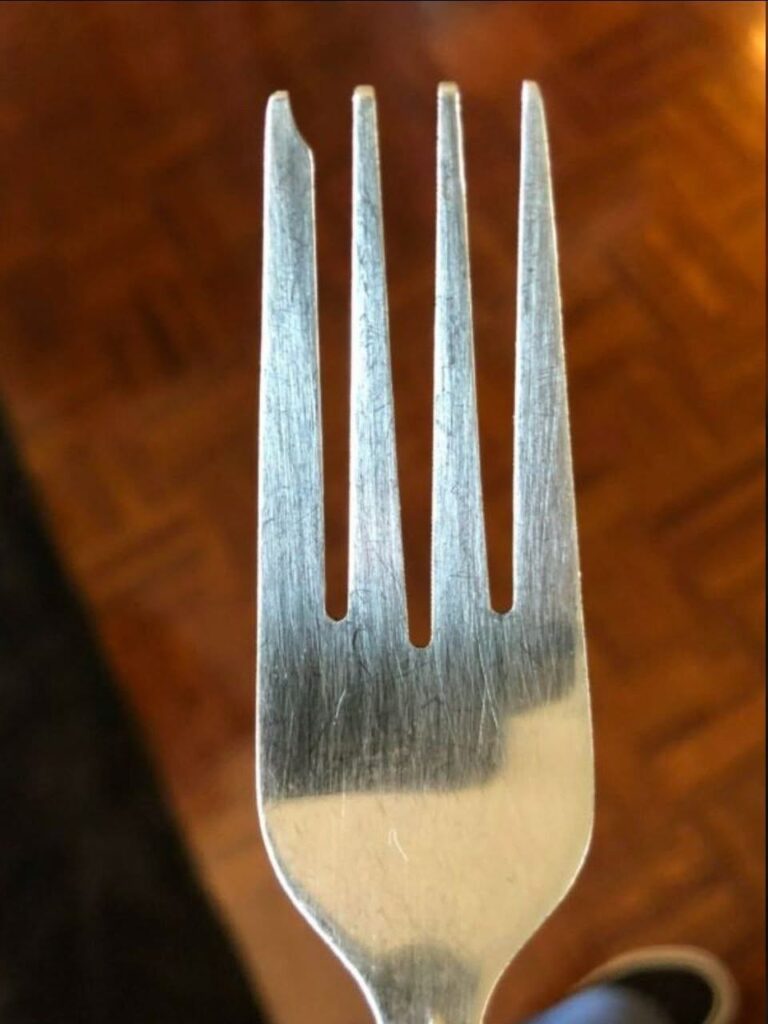
- Three standard pointed tines
- One noticeably shorter and wider tine
- A flattened cutting edge
- Slightly heavier construction than a standard dinner fork
If your fork matches this description, chances are it was intentionally designed as a cutting fork—not accidentally damaged.
Frequently Asked Questions
Is a cutting fork the same as a salad fork?
No. Salad forks are generally smaller and have shorter tines overall, while a cutting fork features one specially designed wide tine intended for cutting food.
Can it replace a steak knife?
Not entirely. A cutting fork works well for tender foods, but tougher meats are still best cut with a proper steak knife.
Why don’t most flatware sets include cutting forks today?
Modern dining habits and standardized flatware have made traditional forks and knives more common, although cutting forks remain available through specialty manufacturers and vintage collections.
Final Thoughts
The next time you notice a fork with one short, wide prong, don’t assume it’s damaged. That distinctive design is the hallmark of a clever utensil created to make dining more efficient.
By combining the functions of a fork and a cutting edge into one practical tool, the cutting fork reflects an era when thoughtful design focused on simplifying everyday life.
Sometimes, the most interesting kitchen innovations are hiding in plain sight—right inside your silverware drawer.
ADVERTISEMENT