ADVERTISEMENT
How Common Is This?
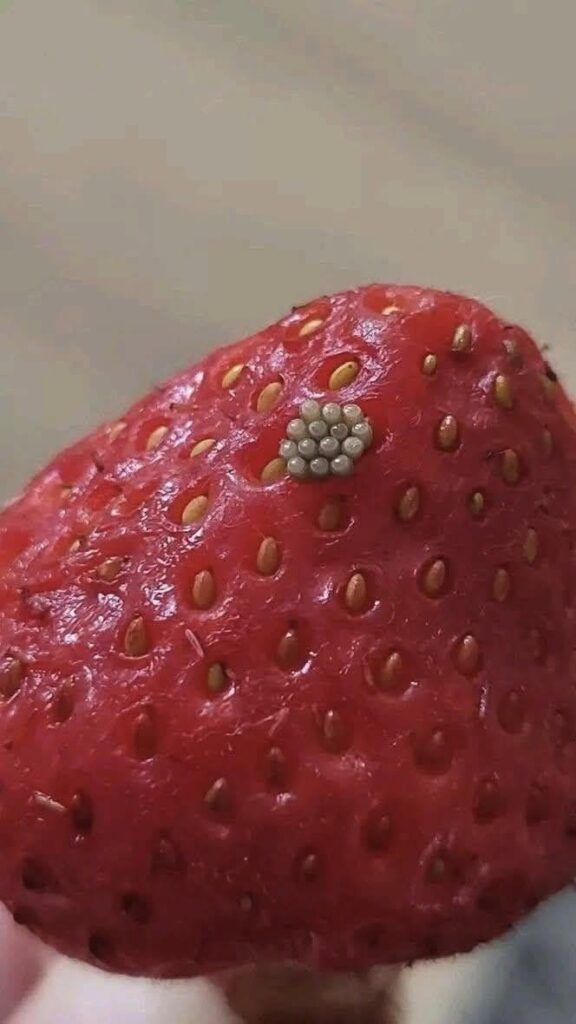
Finding larvae in strawberries is more common than many consumers realize.
Because the larvae are extremely small and live inside the fruit, they often go unnoticed.
ADVERTISEMENT
Factors that increase the likelihood include:
- Locally grown berries
- Organic fruit
- Fruit harvested during warm weather
- Overripe berries
The presence of larvae does not necessarily indicate poor farming practices or contaminated fruit.
How to Reduce the Risk
While it’s impossible to guarantee that every berry is completely free of insects, a few simple steps can help minimize the chances.
1. Wash Berries Thoroughly
Rinse strawberries under cool running water before eating.
2. Use a Saltwater Soak
A brief saltwater soak can help reveal hidden larvae and remove debris.
3. Refrigerate Promptly
Cold temperatures slow insect activity and help preserve freshness.
4. Inspect Overripe Fruit
Discard berries that appear overly soft, damaged, or moldy.
5. Purchase Fresh Produce Frequently
Freshly harvested berries generally have less time for insect development.
Common Myths About Strawberry Worms
Myth: The Salt Water Creates Worms
False.
The larvae were already inside the fruit before soaking.
Myth: The Larvae Are Dangerous Parasites
False.
Fruit fly larvae cannot infect humans.
Myth: Eating One Will Make You Sick
False.
Accidental consumption is generally harmless.
Myth: Only Organic Strawberries Contain Larvae
False.
Both conventionally grown and organic strawberries can occasionally contain fruit fly larvae.
Should You Stop Eating Strawberries?
Absolutely not.
Strawberries remain one of the most nutritious fruits available.
They are rich in:
- Vitamin C
- Fiber
- Antioxidants
- Potassium
- Plant compounds that support overall health
The occasional presence of tiny fruit fly larvae may be unpleasant to discover, but it does not outweigh the many nutritional benefits strawberries provide.
Final Thoughts
Seeing tiny white larvae emerge from strawberries during a saltwater soak can certainly be surprising. However, these small creatures are usually harmless fruit fly larvae that naturally occur in some soft fruits.
A quick soak, thorough rinse, and proper storage can help reduce the likelihood of encountering them. Most importantly, food safety experts agree that accidentally consuming them poses little to no health risk.
So the next time you enjoy a bowl of fresh strawberries, you can do so with confidence—armed with a better understanding of what may be hiding inside and why it’s usually nothing to worry about.
ADVERTISEMENT