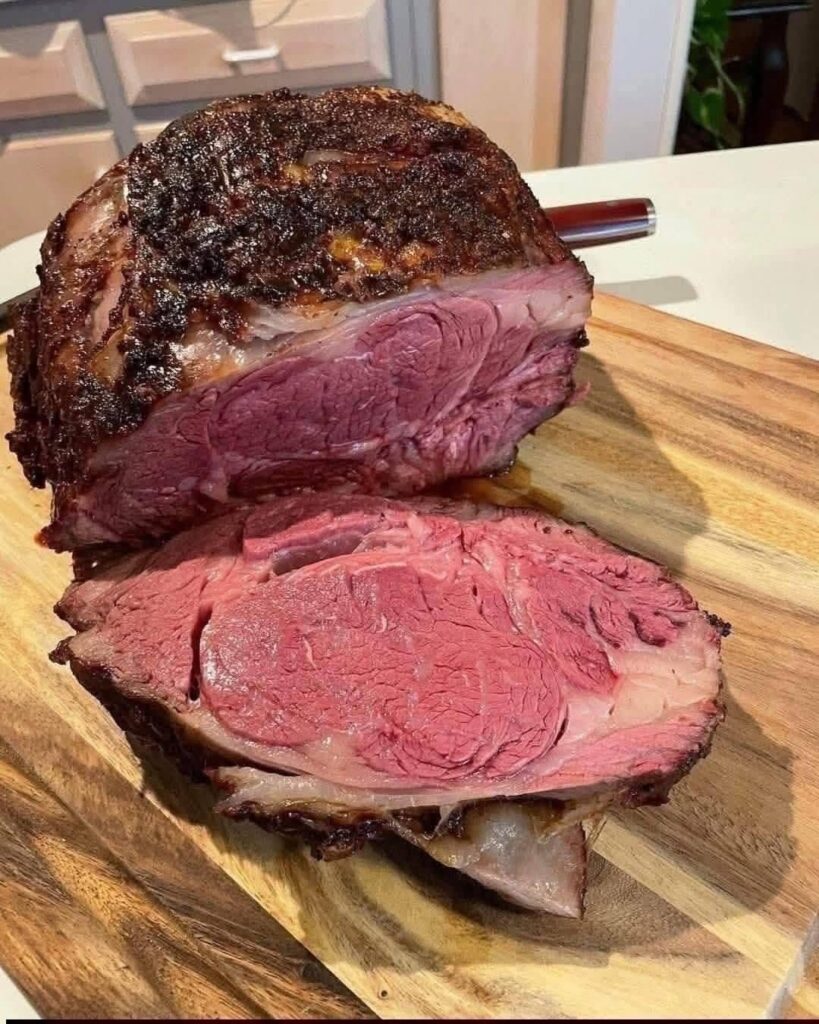
How Much Prime Rib Per Person?
ADVERTISEMENT
A general guideline is:
- 1 pound per person for bone-in roasts
- ¾ pound per person for boneless roasts
Serving Guide
| Guests | Bone-In Roast |
|---|---|
| 4–6 | 3–4 ribs |
| 6–8 | 4–5 ribs |
| 8–10 | 5–6 ribs |
| 10–12 | 6–7 ribs |
Understanding Marbling
Marbling refers to the thin streaks of fat distributed throughout the meat.
Good marbling provides:
ADVERTISEMENT
- Better flavor
- Greater tenderness
- Enhanced juiciness
When selecting a roast, look for consistent white flecks of fat throughout the muscle.
Preparing Prime Rib for Cooking
Thawing Properly
If frozen:
- Thaw in the refrigerator
- Allow 24–48 hours depending on size
Avoid thawing at room temperature.
Bring to Room Temperature
Remove the roast from the refrigerator approximately 2 hours before cooking.
Benefits include:
- More even cooking
- Improved temperature control
- Better final texture
Trimming the Fat
Leave approximately ¼ inch of fat on the exterior.
This layer helps:
- Protect the meat during roasting
- Develop a flavorful crust
- Enhance overall richness
The Best Prime Rib Seasoning
Prime rib doesn’t require complicated seasoning.
A simple rub allows the natural beef flavor to shine.
Classic Prime Rib Rub
- 2–3 tablespoons kosher salt
- 1–2 tablespoons freshly ground black pepper
- 1–2 teaspoons garlic powder
Optional Additions
- Fresh rosemary
- Thyme
- Onion powder
- Smoked paprika
Seasoning Tips
- Pat the roast dry.
- Apply seasoning generously.
- Allow it to rest for at least one hour.
- For deeper flavor, season overnight and refrigerate uncovered.
Traditional Oven-Roasted Prime Rib
Step 1: Initial High-Heat Roast
Preheat oven to:
450°F (230°C)
Roast for:
20–30 minutes
This creates the initial crust.
Step 2: Lower Temperature
Reduce oven temperature to:
325°F (160°C)
Continue roasting until desired doneness is reached.
Internal Temperature Guide
| Doneness | Remove From Oven |
| Rare | 120–125°F (49–52°C) |
| Medium-Rare | 130–135°F (54–57°C) |
| Medium | 140–145°F (60–63°C) |
Reverse Sear Method
Many chefs prefer reverse searing because it creates exceptionally even doneness.
How It Works
- Roast at 225–250°F (107–121°C).
- Cook until 10–15°F below target temperature.
- Finish with high heat for 10–15 minutes.
Benefits
- Uniform pink interior
- Better crust formation
- Greater control over doneness
Why a Meat Thermometer Is Essential
Prime rib is too valuable to estimate.
Use an instant-read thermometer inserted into the thickest section of the roast.
Avoid touching bone, which can produce inaccurate readings.
Remember Carryover Cooking
During resting, the internal temperature typically rises:
5–10°F
Remove the roast slightly before your desired final temperature.
How to Create the Perfect Prime Rib Crust
A great prime rib should have:
- Deep golden-brown color
- Crisp exterior
- Flavorful seasoning crust
Tips for Better Crust Development
- Pat the roast completely dry before seasoning.
- Use kosher salt generously.
- Roast uncovered.
- Finish with high heat if necessary.
- Allow airflow around the roast on a roasting rack.
The contrast between a crisp exterior and tender interior is what makes prime rib truly exceptional.
Resting the Roast
One of the most important steps is also the easiest.
After cooking:
- Remove the roast from the oven.
- Tent loosely with foil.
- Rest for 20–30 minutes.
Resting allows juices to redistribute throughout the meat, producing cleaner slices and a juicier final result.
How to Carve Prime Rib
For Bone-In Roasts
- Remove the rib bones in one piece.
- Slice across the grain.
- Cut to desired thickness.
For Boneless Roasts
Simply slice directly across the grain.
For restaurant-style servings, aim for slices approximately ½ to 1 inch thick.
Best Side Dishes for Prime Rib
Prime rib pairs beautifully with classic steakhouse sides.
Popular choices include:
- Garlic mashed potatoes
- Roasted vegetables
- Yorkshire pudding
- Creamed spinach
- Green beans
- Au jus
- Horseradish sauce
These accompaniments complement the richness of the beef without overpowering it.
Frequently Asked Questions
What is the best doneness for prime rib?
Most chefs recommend medium-rare (130–135°F) for optimal tenderness and flavor.
Should prime rib be covered while roasting?
No. Roasting uncovered helps develop a flavorful crust.
How long should prime rib rest?
Allow 20–30 minutes before carving.
Can leftovers be reheated?
Yes. Reheat gently at low temperatures to preserve tenderness.
Final Thoughts
A perfectly cooked prime rib roast is one of the most impressive meals you can serve. By selecting a well-marbled roast, seasoning it properly, monitoring internal temperature, and allowing adequate resting time, you can achieve restaurant-quality results at home.
Whether you’re preparing a holiday feast or celebrating a special occasion, mastering prime rib is a skill that rewards you with unforgettable flavor, elegant presentation, and a truly memorable dining experience.
ADVERTISEMENT