Choose the Right Soil
ADVERTISEMENT
Standard potting soil often retains too much moisture.
A better rosemary mix contains materials that improve drainage, such as:
- Potting soil
- Coarse sand
- Perlite
- Fine gravel
- Small bark pieces
The goal is loose, airy soil that dries relatively quickly after watering.
ADVERTISEMENT
Don’t Overfeed Your Plant
Many gardeners assume fertilizer will encourage faster growth.
For rosemary, less is usually more.
Too much fertilizer can cause:
- Soft, weak stems
- Reduced aroma
- Excess leafy growth
- Fewer woody branches
Feed only during active spring and summer growth using a diluted balanced fertilizer every 6–8 weeks.
Avoid fertilizing during winter when growth naturally slows.
Prune Regularly for Healthier Growth
Light pruning helps rosemary stay compact and productive.
After flowering or during active growth:
- Trim soft green stems.
- Remove dead or damaged branches.
- Shape the plant gently.
Avoid cutting into thick, old woody stems, as rosemary often struggles to regrow from older wood.
Regular harvesting actually encourages fuller, bushier plants.
Watch Indoor Humidity
Many homes become quite humid, especially kitchens and bathrooms.
Rosemary generally prefers lower humidity than tropical houseplants.
To help indoor plants thrive:
- Keep them in well-ventilated rooms.
- Avoid overcrowding with moisture-loving plants.
- Don’t mist the leaves.
- Ensure good airflow around the plant.
Fresh air helps reduce fungal problems while keeping foliage healthy.
Repot When Necessary
If roots begin circling tightly inside the pot, rosemary may become stressed.
Signs it’s time to repot include:
- Roots growing through drainage holes
- Water running straight through the pot
- Slowed growth
- Frequent wilting despite proper watering
Move the plant into a container only slightly larger than the current one to avoid excess soil holding too much moisture.
Protect Rosemary During Winter
Rosemary tolerates mild cold but can struggle with prolonged freezing temperatures.
In colder climates:
- Bring potted plants indoors before hard frost.
- Place them near a sunny window.
- Water less frequently during winter.
- Keep them away from heating vents.
Outdoor plants may benefit from mulch around the base, but avoid piling mulch directly against the stems.
Common Rosemary Problems
Brown Leaf Tips
Often caused by:
- Overwatering
- Poor drainage
- Low light
- Winter stress
Yellow Leaves
Usually linked to:
- Excess moisture
- Root rot
- Poor drainage
Weak, Leggy Growth
Most commonly caused by:
- Too little sunlight
Crispy Leaves
Can result from:
- Extended drought
- Very dry indoor air combined with underwatering
Correcting the growing conditions usually helps prevent these issues before they become serious.
The Simple Gardening Hack
The easiest way to keep rosemary healthy is to remember one simple rule:
Treat it like a Mediterranean plant—not a typical houseplant.
That means:
- Plenty of sunshine
- Fast-draining soil
- Deep but infrequent watering
- Good airflow
- Minimal fertilizer
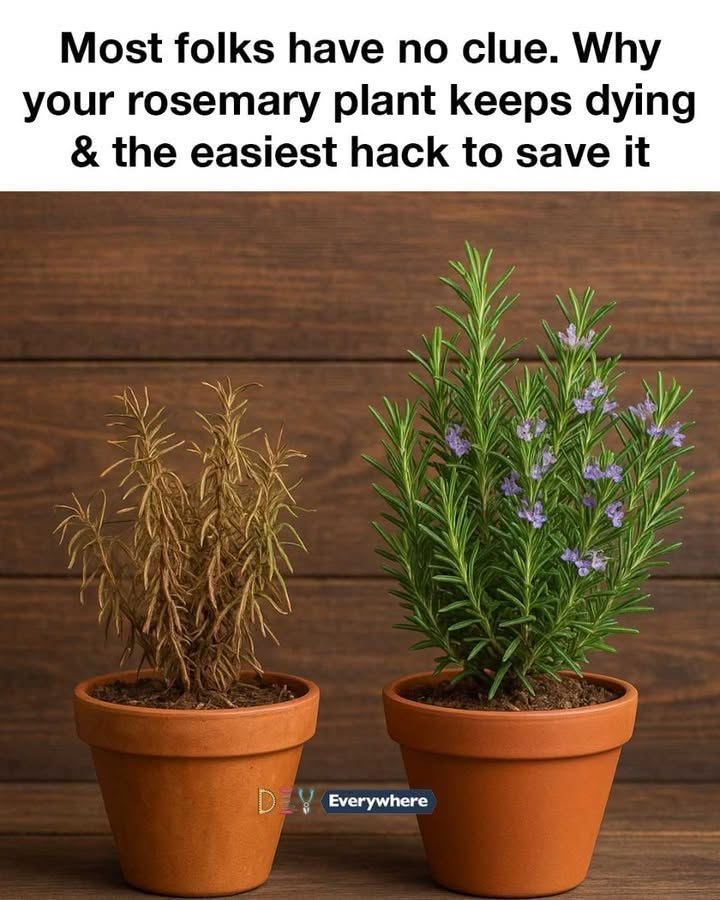
These simple adjustments often make the difference between a struggling rosemary plant and one that stays lush, fragrant, and productive year after year.
Final Thoughts
Rosemary has earned a reputation for being difficult, but in reality, it simply prefers conditions that differ from many common houseplants. Most problems can be traced back to overwatering, poor drainage, or insufficient sunlight.
By recreating the dry, sunny environment rosemary naturally loves, you can enjoy a vigorous herb that rewards you with fragrant foliage throughout the year. Whether growing it indoors on a windowsill or outdoors in the garden, a few thoughtful care habits are all it takes to help your rosemary flourish.