Why Some Meats Look Redder Than Others
ADVERTISEMENT
Different animals have different levels of myoglobin.
Higher Myoglobin Content
These meats typically appear darker red:
- Beef
- Lamb
- Venison
Lower Myoglobin Content
These meats usually appear lighter:
ADVERTISEMENT
- Chicken
- Turkey
- Pork
This is why beef steaks often release more reddish liquid than poultry products.
Why Does Steak Release So Much Liquid?
Several factors can cause meat to release moisture:
Freezing and Thawing
Ice crystals can damage muscle fibers, allowing more liquid to escape when thawed.
Packaging Process
Fresh meat is often packaged in a way that retains natural moisture, which may collect in the tray.
Cooking
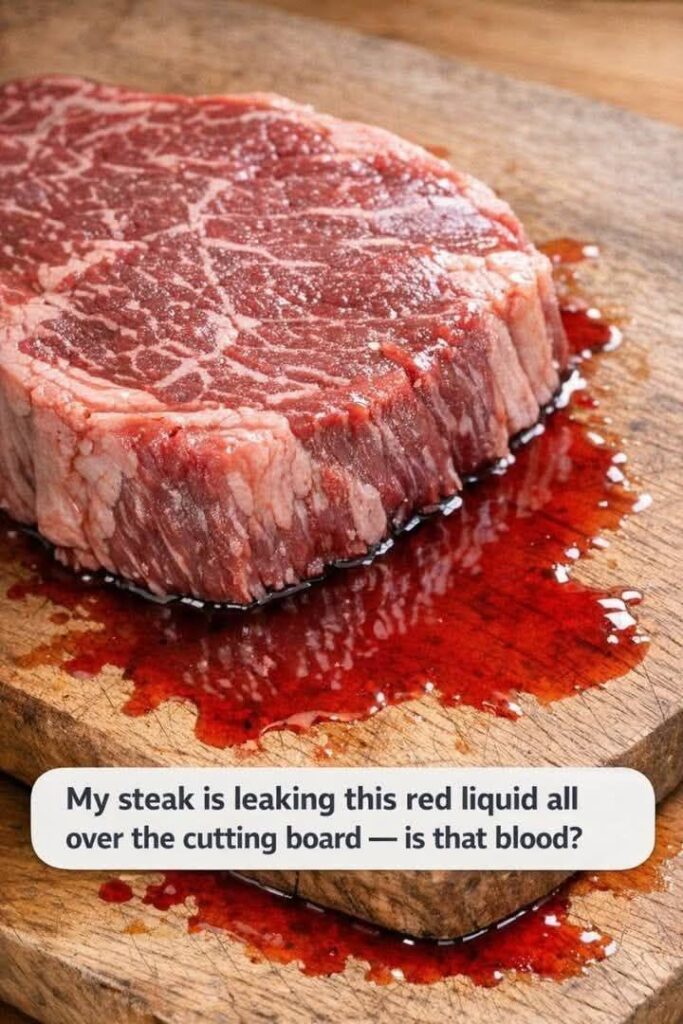
Heat causes muscle fibers to contract and release water. Some of that moisture contains dissolved myoglobin, creating the familiar red or pink juices.
Is It Safe to Eat?
Yes. The red liquid associated with myoglobin is generally safe to consume when the meat has been properly stored and cooked.
Food safety depends on:
- Proper refrigeration
- Safe handling practices
- Cooking to recommended internal temperatures
The color of meat juices alone is not a reliable indicator of whether meat is fully cooked.
How to Know When Steak Is Properly Cooked
Instead of relying on color, use a food thermometer.
Recommended Internal Temperatures
| Meat Type | Safe Internal Temperature |
|---|---|
| Beef, Lamb, Veal Steaks | 145°F (63°C) |
| Ground Beef | 160°F (71°C) |
| Poultry | 165°F (74°C) |
| Pork | 145°F (63°C) |
A thermometer provides the most accurate way to ensure food safety.
Common Myths About Steak Juice
Myth #1: Red Juice Means the Meat Is Raw
False. The liquid is primarily water and myoglobin, not blood.
Myth #2: Clear Juices Mean Meat Is Safe
Not always. Color alone cannot determine whether meat has reached a safe internal temperature.
Myth #3: Red Meat Contains More Blood
The darker appearance of red meat comes largely from higher concentrations of myoglobin, not retained blood.
Final Thoughts
If you’ve ever wondered whether the red liquid leaking from your steak is blood, you can put that myth to rest. What you’re seeing is mostly water combined with myoglobin, a natural protein responsible for storing oxygen in muscle tissue.
Understanding this simple food science fact can help you shop, cook, and enjoy meat with greater confidence. The next time a steak releases red juices onto your cutting board, you’ll know exactly what’s happening—and why it’s completely normal.
Frequently Asked Questions
Is the red liquid in steak blood?
No. It is primarily water mixed with myoglobin, a protein found in muscle tissue.
Why does my steak release so much juice?
Natural moisture, thawing, packaging, and cooking all contribute to liquid loss.
Is myoglobin safe to eat?
Yes. Myoglobin is a naturally occurring protein and is safe when meat is properly handled and cooked.
Does red juice mean steak is undercooked?
No. The color of meat juices is not a reliable indicator of doneness.
What is the safest way to check if steak is cooked?
Use a food thermometer to verify that the meat has reached the recommended internal temperature.
ADVERTISEMENT