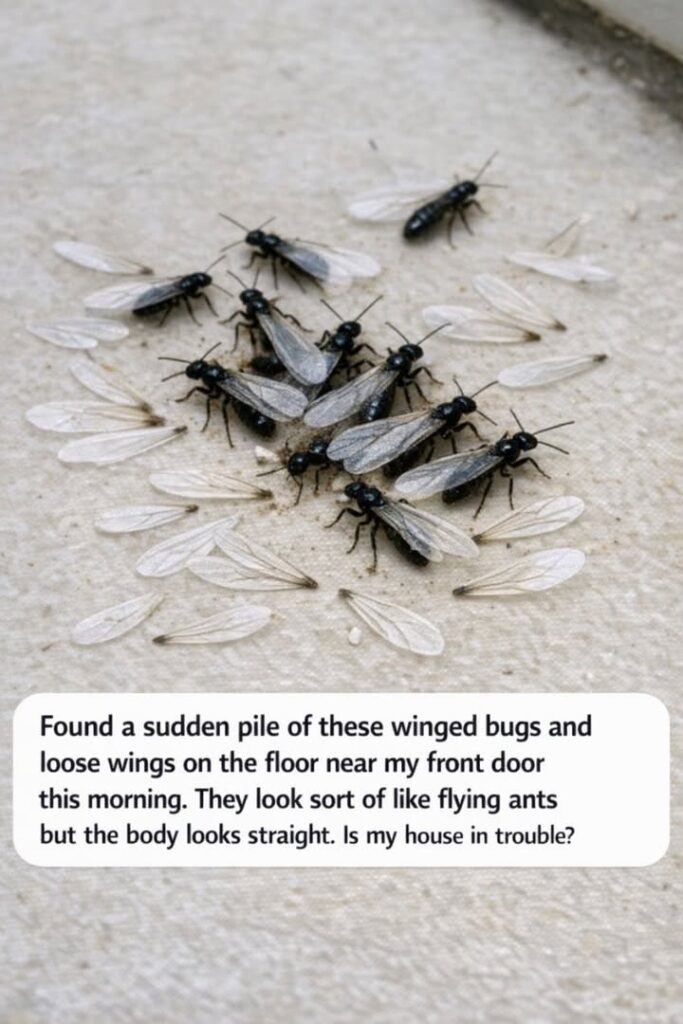
Termite Swarmers
- Straight antennae
- Thick, uniform waist
- Two pairs of equal-length wings
- Typically measure ¼ to ⅜ inch long
- Wings easily detach after swarming
Flying Ants
- Bent or elbowed antennae
- Narrow, pinched waist
- Front wings longer than back wings
- More segmented body appearance
ADVERTISEMENT
Correct identification is critical because termites pose a much greater threat to your home’s structure.
Why Are There Piles of Wings Near Doors and Windows?
One of the most common signs of termite activity is finding small piles of discarded wings near:
- Entry doors
- Window sills
- Baseboards
- Light fixtures
- Garage doors
After mating, termite swarmers shed their wings and search for locations to establish new colonies.
ADVERTISEMENT
Finding discarded wings doesn’t automatically mean your home has extensive termite damage, but it does indicate that termites are active somewhere nearby and should not be ignored.
Why Termites Swarm Around Lights
Termite swarmers are strongly attracted to light sources.
That’s why homeowners frequently notice them around:
- Porch lights
- Outdoor security lights
- Interior windows
- Glass doors
- Garage lighting
Swarming typically occurs during warm, humid conditions, often after rainfall when environmental conditions are favorable for reproduction.
Warning Signs of a Hidden Termite Infestation
In addition to swarmers and shed wings, watch for these common signs of termite activity:
Mud Tubes
Thin mud tunnels running along:
- Foundations
- Basement walls
- Crawl spaces
- Exterior structures
These tubes help subterranean termites travel while remaining protected from predators and dehydration.
Hollow-Sounding Wood
Tap exposed wooden surfaces.
If the wood sounds hollow or papery, termites may have consumed the interior.
Damaged Wood
Termite-damaged wood may:
- Crack easily
- Appear blistered
- Feel soft
- Break apart with little pressure
Frass (Termite Droppings)
Small pellet-like droppings near wooden structures can indicate active termite colonies.
Simple DIY Inspection Steps
If you suspect termites, perform a basic inspection around your property.
Check Around Entry Points
Inspect:
- Door frames
- Window frames
- Foundation walls
- Porch supports
- Wooden trim
Look for Moisture Problems
Termites thrive in damp environments.
Pay close attention to:
- Leaking faucets
- Poor drainage
- Standing water
- Damaged gutters
Seal Cracks and Gaps
Prevent future entry by sealing:
- Foundation cracks
- Gaps around utility lines
- Door frame openings
- Window frame gaps
When You Should Contact a Professional
If you’ve confirmed termite swarmers or found evidence of termite activity, scheduling a professional inspection is strongly recommended.
Professional pest control experts can:
- Identify termite species
- Locate hidden colonies
- Assess structural damage
- Recommend effective treatment solutions
Early intervention can significantly reduce repair costs and prevent further damage.
Common Professional Termite Treatments
Depending on the infestation level, professionals may recommend:
Liquid Termiticides
Applied around foundations to create a protective barrier.
Termite Bait Systems
Strategically placed stations that eliminate colonies over time.
Localized Treatments
Targeted treatment for specific infestation areas.
Whole-Structure Treatments
Used for severe infestations affecting multiple areas of a property.
How Much Damage Can Termites Cause?
Termites are responsible for billions of dollars in property damage each year.
Because they consume wood from the inside out, infestations often go unnoticed until significant damage has already occurred.
Potential problems include:
- Damaged floor joists
- Weakened support beams
- Structural instability
- Expensive repair bills
- Reduced property value
The sooner an infestation is detected, the easier and less costly it is to address.
How to Prevent Future Termite Problems
Taking preventive measures can significantly reduce your risk.
Reduce Moisture Around the Home
- Clean gutters regularly
- Repair leaks promptly
- Improve drainage away from foundations
Eliminate Wood-to-Soil Contact
Avoid direct contact between soil and:
- Deck posts
- Siding
- Firewood stacks
- Wooden fencing
Store Firewood Properly
Keep firewood:
- Elevated off the ground
- At least 20 feet from the home when possible
Schedule Regular Inspections
Annual termite inspections can help detect problems before they become severe.
What Homeowners, Renters, and Landlords Should Know
For Homeowners
Review your insurance policy carefully. Most standard homeowner policies do not cover termite-related damage.
For Renters
Report signs of termite activity immediately to your landlord or property manager and document what you find with photos.
For Property Owners and Landlords
Prompt treatment protects both the property and future repair costs.
For Neighbors
Since termite colonies can spread between nearby properties, discussing concerns with neighbors may help identify larger neighborhood-wide issues.
Final Thoughts
Finding winged insects or piles of discarded wings near your front door should never be ignored. While they may simply be flying ants, they could also be termite swarmers signaling a nearby colony.
Learning to identify the warning signs, conducting a basic inspection, and seeking professional help when necessary can save thousands of dollars in potential repairs. Early detection remains the best defense against termite damage and helps keep your home safe, secure, and structurally sound for years to come.
ADVERTISEMENT