What It Usually Is Not
ADVERTISEMENT
Many people immediately fear the worst when they discover an unfamiliar spot in their food.
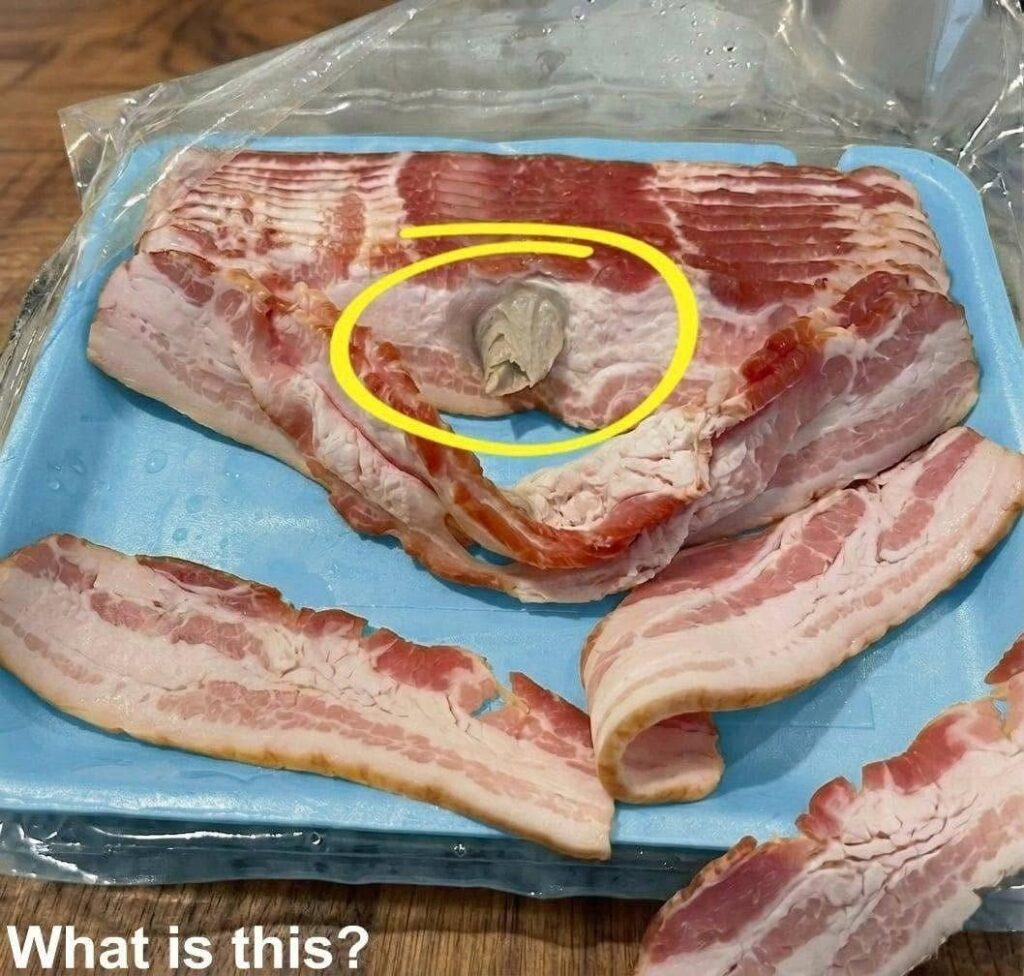
Fortunately, these pale lumps are typically not:
- Packaging material
- Manufacturing defects
- Foreign contamination
- Parasites
- Evidence of spoilage on their own
Appearance alone rarely indicates a serious issue.
ADVERTISEMENT
When Should You Throw the Bacon Away?
While unusual tissue is often harmless, there are situations where discarding the product is the safest option.
Avoid consuming bacon if you notice:
- A sour or unpleasant odor
- Sticky or slimy texture
- Green, gray, or black discoloration
- Excessive liquid accompanied by spoilage smells
- Packaging that appears damaged or improperly sealed
These signs may indicate spoilage rather than a harmless tissue variation.
What Should You Do If You Find One?
If the bacon otherwise appears fresh and smells normal, many people simply remove the unusual piece and continue preparing the remaining slices.
However, if you feel uncertain about the product’s condition, it’s always reasonable to discard it and choose a replacement.
Food safety should always take priority over avoiding waste.
Why Natural Variations Occur in Meat Products
It’s important to remember that bacon comes from a natural animal product.
Unlike highly processed foods that appear perfectly uniform, meat products can occasionally contain variations in:
- Color
- Texture
- Fat distribution
- Connective tissue
- Shape
These differences are often completely normal and reflect the natural structure of the animal.
Final Thoughts
Finding a strange white lump in your bacon can certainly be surprising, but in many cases it’s simply a natural fat deposit, connective tissue, or another harmless part of the pork.
The most important factors to consider are the overall freshness, smell, texture, and appearance of the product. If everything else seems normal, the unusual piece is often nothing more than a natural variation.
As always, when in doubt, follow food safety guidelines and trust your instincts.
ADVERTISEMENT