ADVERTISEMENT
Discover why hard-boiled eggs sometimes develop a green or gray ring around the yolk, whether it’s safe to eat, and the easiest ways to prevent it for perfectly cooked eggs every time.
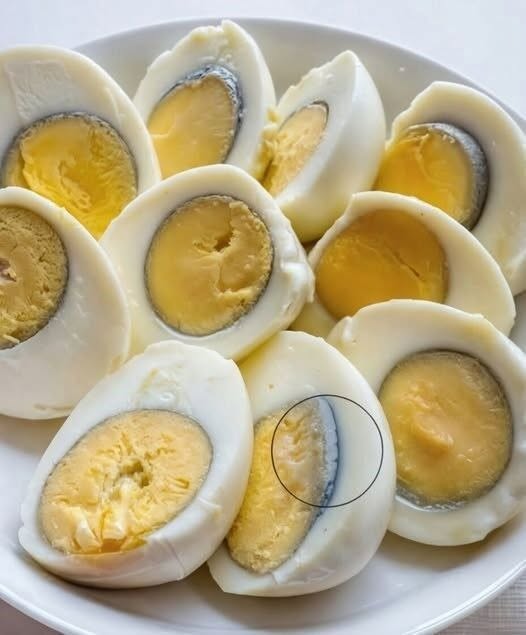
You Slice Open a Hard-Boiled Egg and See a Green Ring—Should You Be Concerned?
Few kitchen moments are more disappointing than preparing what looks like the perfect hard-boiled egg, only to cut it open and discover a greenish-gray ring surrounding the yolk.
At first glance, it can seem alarming.
ADVERTISEMENT
Did the egg spoil?
Was it overcooked?
Is it still safe to eat?
Fortunately, the answer is reassuring.
That unusual-looking ring is actually a common and harmless result of a natural chemical reaction that occurs during cooking.
Let’s explore why it happens, whether you should worry, and how to achieve beautiful golden yolks every time.
Is the Green Ring Around the Yolk Safe?
Yes.
A green or gray ring around a hard-boiled egg yolk is completely safe to eat.
It does not indicate:
- Spoilage
- Bacterial contamination
- Poor-quality eggs
- Unsafe food
While it may affect appearance, it has very little impact on flavor or nutritional value.
The ring is simply the result of a chemical reaction between naturally occurring elements inside the egg.
What Causes the Green Ring?
The phenomenon occurs when sulfur and iron interact during cooking.
Here’s What Happens:
When eggs are heated:
- The egg whites release sulfur compounds.
- The yolk naturally contains iron.
- Sulfur reacts with iron at the surface of the yolk.
- A compound called ferrous sulfide forms.
Ferrous sulfide creates the characteristic greenish-gray ring that appears around the outer edge of the yolk.
It’s a natural reaction—not a sign that anything is wrong with the egg.
Why Does It Happen More Often With Overcooked Eggs?
The longer an egg remains exposed to high temperatures, the more opportunity sulfur and iron have to react.
Several factors increase the likelihood of ring formation:
Overcooking
Extended cooking times encourage the sulfur-iron reaction.
Water That’s Too Hot
A vigorous rolling boil can accelerate the process.
Slow Cooling
Leaving eggs in hot water after cooking allows the reaction to continue.
Older Eggs
Older eggs tend to be more alkaline, which may increase sulfur release during cooking.
Does the Green Ring Affect Taste?
In most cases, the difference is minimal.
However, severely overcooked eggs may develop:
- A slightly stronger sulfur smell
- A drier yolk texture
- A more crumbly consistency
The green ring itself isn’t responsible for major flavor changes—overcooking is the main culprit.
How to Prevent the Green Ring
See more on the next page to continue reading →
ADVERTISEMENT